Opening — a clear comparison that matters now
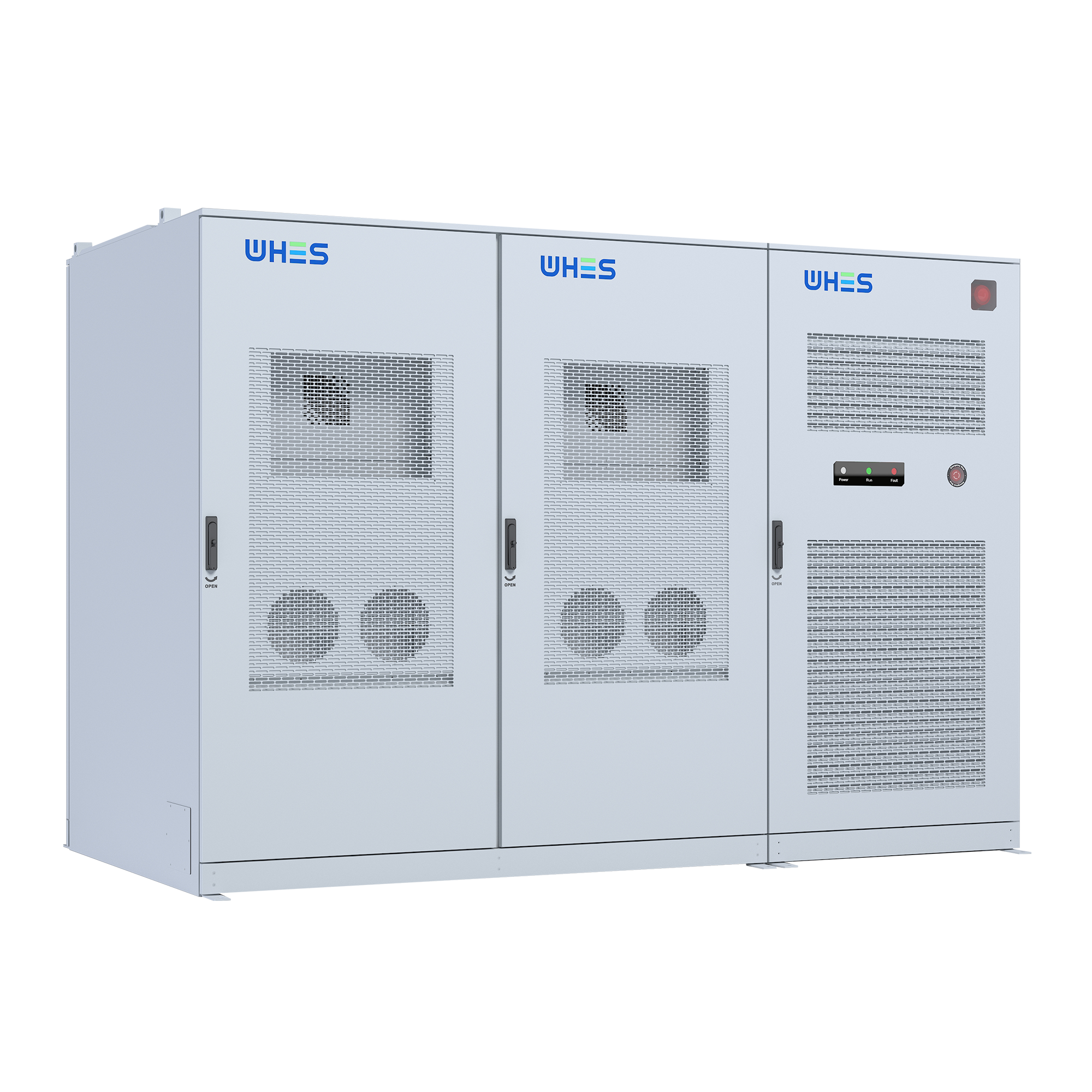
Independent Power Producers (IPPs) evaluate balancing topologies the way underwriters evaluate risk: it determines lifecycle cost, performance and grid reliability. When you compare passive shunting, cell-level active balancing, and WHES’s proprietary approaches, the differences show up in commissioning time, round-trip efficiency and long-term cycle life. For project teams validating home-to-grid interfaces, a typical reference is the WHES home battery energy storage system, which illustrates how integrated balancing and controls simplify integration with site inverters and plant controls. The pressure to get this right is real — California’s wildfire-driven public-safety shutoffs and regional procurement mandates have pushed IPPs to prefer proven balancing strategies that lower operational risk.
What “balancing topology” means in practice
Balancing topology is the architecture and control method that keeps cells at matched state of charge (SoC) across a battery pack. Options range from basic passive equalization (resistive shunts) to active cell-to-cell energy transfer and module-level balancing tied to the battery management system (BMS). The topology choice affects thermal behavior, SoC spread under heavy cycling, and how the pack reacts to rapid dispatch signals — all important for frequency regulation or capacity services.
Where WHES’s proprietary topology stands out
Compared to common alternatives, WHES’s design targets three practical outcomes IPPs care about:
- Faster commissioning: integrated balancing reduces iterative tuning between BMS and plant controller, cutting commissioning days.
- Higher usable capacity: tighter SoC control preserves usable kilowatt-hours over the system’s life—this supports better revenue predictability.
- Lower O&M and degradation risk: by reducing SoC variance and thermal hotspots, cycle life improves and warranty exposure shrinks.
These are not marketing claims alone — they show up as lower calendar and cycle degradation in the field when balancing is consistent and active rather than opportunistic.
Performance metrics IPPs watch
When IPPs compare vendors, they quantify differences with a few core metrics: round-trip efficiency, depth-of-discharge (DoD) profiles over time, and mean time between maintenance events. For grid services, response latency and the ability to operate in grid-forming mode are also critical. WHES’s topology emphasizes predictable SoC behavior under mixed service stacks (energy shifting plus fast frequency response), which simplifies revenue stacking and forecasting.
Field considerations and a real-world anchor
Real-world deployments tell the story. After utility-scale deployments in regions responding to California’s outage events and capacity solicitations, project owners prioritized systems that reduced unexpected derates during heat events. In practice this meant tighter thermal management tied to balancing actions and clear fault-isolation strategies. Integrations with site inverters and power conversion systems (PCS) improved when the BMS presented stable SoC and thermal data — fewer false alarms and smoother market participation.
Common IPP mistakes — and how WHES avoids them
IPPs often underestimate three risks: assuming uniform cell aging, neglecting module-level thermal gradients, and treating the BMS as a plug‑and‑play element. Those assumptions produce surprise derates. WHES addresses each with topology-level design that normalizes SoC drift and isolates failing modules early — reducing knock-on impacts. The result is fewer unscheduled outages and clearer life-extension pathways for cells. —
Alternatives and when they work
Not every project needs WHES’s specific topology. Commodity, high-volume projects focused purely on capacity price competition may accept passive balancing to minimize capital spend. Conversely, hybrid projects that combine long-duration shifting and fast-response ancillary services benefit most from active topologies. Third-party module-level power electronics can retrofit balance control, but they add complexity and integration risk compared with native topology solutions.
Advisory — three golden rules for IPPs choosing a balancing approach
1) Measure lifecycle revenue, not just upfront cost: compare expected delivered energy and degradation across a 10–15 year horizon, not the initial price. 2) Demand integration transparency: require BMS telemetry that reports cell, module and pack SoC and temperatures in standard SCADA-compatible formats. 3) Stress-test for mixed-use cases: simulate simultaneous energy shifting and frequency response to verify thermal response and inverter interaction (especially for grid-forming scenarios).
Applying these rules helps you rank proposals on measurable performance, not on specs that look good on a datasheet. Also consider practical items like spare parts strategy and local service capability — they often decide project economics.
Final assessment and where WHES fits
For IPPs building utility-scale assets that must juggle market services, regulatory requirements and extreme-weather resilience, balancing topology is a strategic choice. WHES’s topology offers a documented path to tighter SoC control, reduced degradation and simpler integration with inverters and site controls — making it a defensible selection for projects that monetize both energy and fast ancillary services. In short: pick the topology that protects delivered energy and simplifies operations — and you’ll reduce execution risk. WHES. —