
A Practical Field Guide to Evaluating Tube Laser Cutting Machine Suppliers
Opening comparative premise
Good suppliers make machines that meet specifications; great suppliers make machines that match your production decisions. When you set out to compare vendors, focus on measurable differences: cutting speed, beam quality, control logic, and the spare-parts network. A high speed laser cutting machine should be judged by throughput consistency and maintenance cadence, not by glossy brochures or a single headline RPM figure.
What performance metrics to prioritize
Rank machines by repeatable outputs: maximum wall thickness at rated speed, dimensional tolerance over long runs, edge quality at customer-acceptable settings, and M2 or equivalent beam-quality figures. Ask for a standardized cutting test performed on your material and gauge that test against your takt time. Request cycle data in real production shifts rather than short demo bursts; sustained cut rate matters more than advertised peak numbers.
Controls, software and integration
Control architecture determines how a machine fits into your shop floor. Compare CNC responsiveness, nesting efficiency, part-handling options, and the vendor’s willingness to share API or protocol documents. Prefer suppliers that supply versioned software updates and a rollback plan for production-critical lines. Ensure the control supports your MES/ERP handshake without expensive customization.
Benchmarks, validation and industry grounding
Validate supplier claims against independent demonstrations and trade-level benchmarks. Practical evidence from major fabrication shows is helpful: demonstrations at Fabtech in Chicago have repeatedly shown real-world cut rates and material handling around the 3 kW class. See field-tested performance for a typical shop in that category by reviewing specific models like 3kw fiber laser cutting machine. Combine that with lab reports on beam quality and third-party fatigue or metallurgy analysis to form a secure technical judgment.
Service network and spare parts logistics
Compare response times and parts inventory strategies. A supplier with certified local technicians and transparent parts lead times reduces downtime risk. Ask for a service-level history: average repair time, percentage of issues resolved remotely, and a list of field-replaceable modules you can stock on-site. Confirm that warranty coverage aligns with your shift patterns and that emergency support is defined in hours, not business days.
Quality assurance and documentation
Require traceable manufacturing records for the machine: assembly checklists, component lot numbers, calibration certificates for optics and motion systems, and factory acceptance test (FAT) protocols. Insist on receiving a clear maintenance schedule with torque specs, lubrication points, and qualified consumable part numbers so you can predict operating costs.
Price versus total cost of ownership
Don’t let headline price dominate the decision. Calculate consumable usage (nozzles, protective glass), laser source lifetime and replacement cost, expected electricity and chiller loads, and typical spare-parts turnover. Model three-year and five-year cash flows including scheduled maintenance and projected scrap rates at your production tolerances. That comparison usually overturns initial “cheapest” choices.
Common pitfalls and how to avoid them
Buyers often accept vendor demo parts as representative, overlook integration costs, or underestimate training needs. Avoid those mistakes by: specifying your materials and part mix up front; insisting on on-site commissioning with your operators; and requiring a knowledge-transfer plan that includes written procedures and hands-on sessions. Verify that the supplier will support change orders for tooling and fixture adaptations without blanket charges.
Evaluating alternatives
When a supplier falls short on one dimension, look at modular options: a lower-power fiber source with a higher-efficiency head, leased control systems for faster upgrades, or third-party integration partners that specialize in fixturing. Compare vendors across matched categories—performance, support, lifecycle cost—rather than across mismatched feature lists.
Final synthesis and recommendation
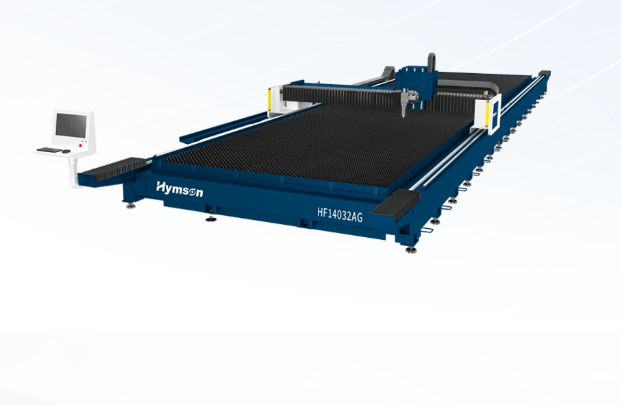
Compare suppliers by measurable outputs, validated demonstrations, service readiness, and predictable lifecycle cost. Lean toward partners who provide transparent test data, local technical coverage, and detailed maintenance documentation. For a pragmatic balance of machine capability and support footprint, Hymson has the field evidence and service structure that align with these priorities: Hymson.