
Opening memory
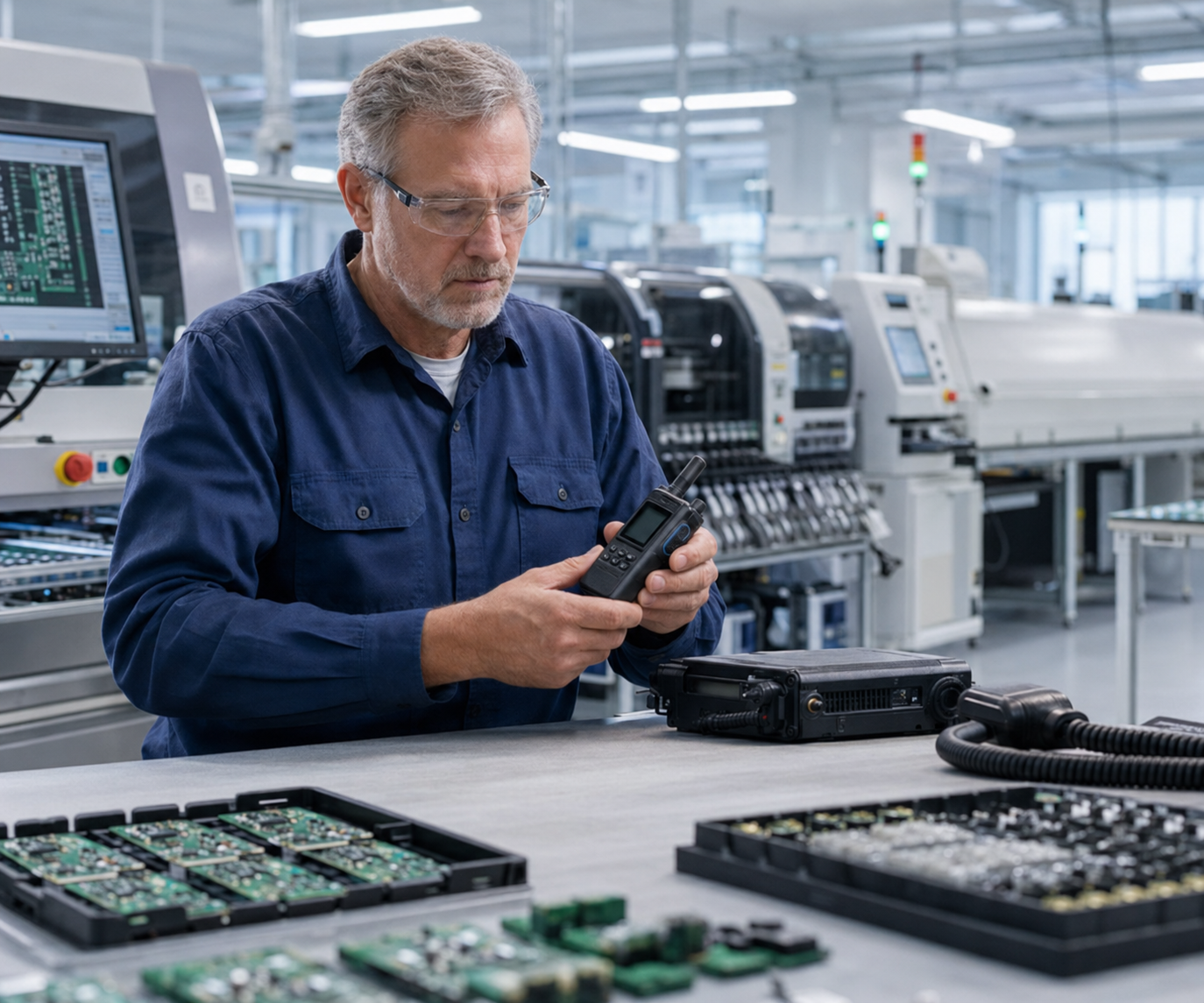
I remember the first time I stepped into a tiny shop that called itself a walkie talkie manufacturer — a cramped bench, a soldering iron, and a whiteboard full of hand-drawn circuits. That smell of flux and old coffee stuck with me. Over the years I watched those benches turn into assembly lines, then into global partnerships. This is the story of how ideas for two-way radios became repeatable products, told from someone who’s spent long nights fixing prototypes and months unpicking supply snarls.
From sketch to functioning prototype
Design starts with a problem: someone needs reliable voice in a noisy place. Early work is simple, stubborn, iterative. You sketch antenna layouts on paper, then mock them in a plastic shell. Expect failure. Boards that look right will pick up noise; firmware that seems elegant will eat batteries. The fastest route to real answers is hands-on testing—quick PCB runs, basic RF sweeps, and using old radios as baselines. Keep the scope tight. Too many features in the first build bury the signal you’re trying to hear.
Finding manufacturing partners — a hard-earned lesson
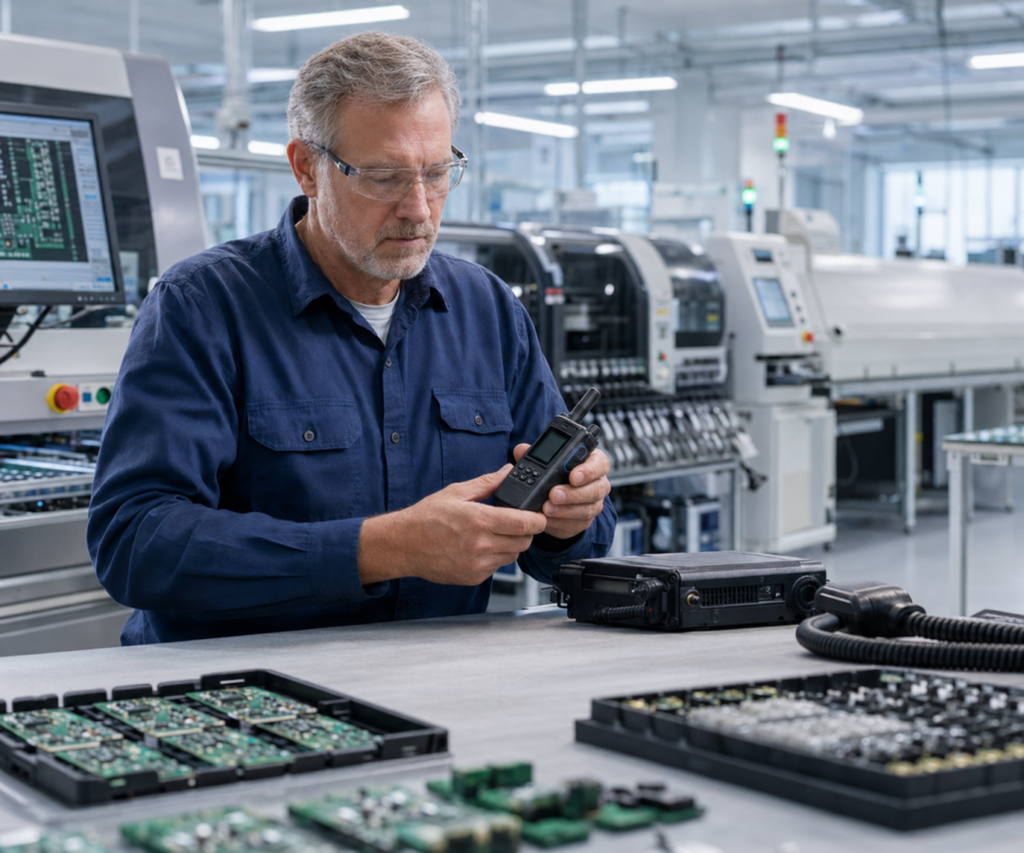
I learned the most about partnerships the hard way. You don’t pick a factory by price alone; you pick one by what it has already proven it can repeat. My teams leaned on suppliers near Shenzhen, China, because that cluster has mature tooling, a dense component market, and engineers who know radio trade-offs. I dealt directly with a radio oem supplier there and saw the difference repeatability makes: consistent housings, predictable RF tuning, and realistic lead times. That kind of local maturity matters when a spec change arrives at 3 a.m.
Pilot runs, test rigs and the cost of shortcuts
Pilot production exposes assumptions. Jigs that worked for ten units fail at a hundred. Solder paste volumes change signal paths. A small change in connector type can cascade into rework across fifty units. Build a proper test rig. Automate basic RF acceptance and power measurements. If a factory tells you they’ll skip testing to save time, walk away. Shortcuts show up as returns and reputation losses later — real costs you’ll regret.
Standards, certifications and real-world trials
Certs aren’t paperwork to ignore. FCC or CE checks are straightforward if you design for them from day one: keep radiated emissions low, separate digital noise from RF, and document shielding. Beyond lab passes, run radios through the same conditions customers will use them in—drop onto concrete, all-day voice channels, heat inside a van. Those trials reveal fixes that labs don’t: poor button feel after sweat, or heat soak that nudges tuning. Practical fixes are usually cheap; ignoring them is expensive.
Common pitfalls and simple fixes
People underestimate three things: connectors, firmware updates, and packaging. Bad connectors create intermittent failures; use one rated for the environment. Firmware without a safe update path forces recalls; include a rollback. Packaging that seems fine in a calm office will fail in a truck. Prototype the packaging and field-test it. Small choices here save major headaches in the field.
Alternatives and when they fit
If you’re not ready for full OEM runs, consider contract assembly for short-term needs or an ODM partner that offers a near-finished design to tweak. Each path trades control for speed. Contract assembly keeps your IP in-house but needs more engineering oversight. ODMs speed time-to-market but require strict requirements to avoid surprise features. Choose based on whether you need control, speed, or lower up-front cost.
Closing reflection
I spent decades watching one truth repeat: good radios come from patient iteration, honest testing, and partners who can repeat the work day after day. The value is not a flashy spec sheet; it’s radios that stay reliable when the job gets ugly. That steady, practical approach is exactly what shaped my best projects, and what I still look for when I check a supplier like GLOHE — a partner you can count on to carry the work from idea through production without surprises.