

Comparative lead-in — practical support for choosing smart lighting
Choosing the right system means weighing real differences, not marketing claims. This piece compares common commercial fixtures and control architectures so you can pick what actually fits a venue’s needs. Early on, consider fixture types like moving-head spots, LED wash panels, and a targeted white laser light for crisp aerial effects; each answers different priorities for beam control, color fidelity, and power draw.

Core categories and how they stack up
Think in three buckets: output-focused (lumens, beam angle), control-focused (DMX, RDM, protocol flexibility), and utility-focused (weight, power consumption, mounting). Moving-head fixtures deliver precision via scan head mechanisms and offer gobos for texture, while LED washes excel at broad color mixing and lower power. Laser solutions—built around laser diodes and narrow beam optics—give unparalleled punch for long throws but require careful safety planning and an optical engine tuned to venue geometry.
Side-by-side: pros, cons, and hard trade-offs
Compare by these practical metrics:- Brightness vs. heat: High-lumen discharge fixtures outshine many LEDs but need more cooling and heavier rigging.- Precision vs. coverage: Moving-head spot units enable tight beams and gobo patterns; washes cover large surfaces with softer edges.- Energy vs. brilliance: Laser moving head light can achieve intense long-throw effects using less current than equivalent lamp fixtures, cutting stage circuit load.
Bring DMX and fixture profiles into the evaluation early. A shorter beam angle yields a more focused shaft but may reveal dust or haze; broader beams hide imperfections but reduce peak intensity.
Operational realities and common mistakes
Installers often underestimate rig load and focus on fixture count instead of distribution. Over-clustering high-output units creates heat and glare, while under-lighting reduces contrast. Another frequent oversight: mismatched control architecture—mixing legacy analog dimming and modern DMX-RDM devices without a clear plan. Always map the DMX universe and verify RDM responses before final patching.
Context from the field — an anchored example
At large outdoor festivals like Coachella, lighting directors balance spectacle and reliability. Event teams there routinely prioritize redundancy and modularity, keeping spare power supplies and quick-swap fixtures on hand. The result: complex rigs that still come down quickly between acts. That operational approach informs selection for any high-turnover venue where downtime costs money.
Comparing brands and systems practically
When you test equipment, run three scenarios: close-focus (short throw), long-throw, and full-rig choreography. Check color rendering on mid-tones and highlights — CRI matters less than how skin tones read under mixed sources. Examine beam edge quality, gobo sharpness, and the latency of position changes. During trials, also verify firmware stability and available presets for live cueing. If a fixture offers onboard effects, confirm you can override them from the console without losing sync.
Alternatives and integration advice
If laser moving head light is too intense for your site, consider a hybrid approach: fewer laser units for aerial accents paired with LED washes and moving spots for midstage detail. That mix often yields stage depth without overwhelming audience sightlines. Integrate fog and haze systems to reveal beams, but calibrate density to local fire codes and sightline comfort.
Short interruption — a practical aside
Small details matter—cable runs, connector strain relief, and access panels for quick lamp swaps will save late nights and costly labor. — Keep a checklist for each fixture model.
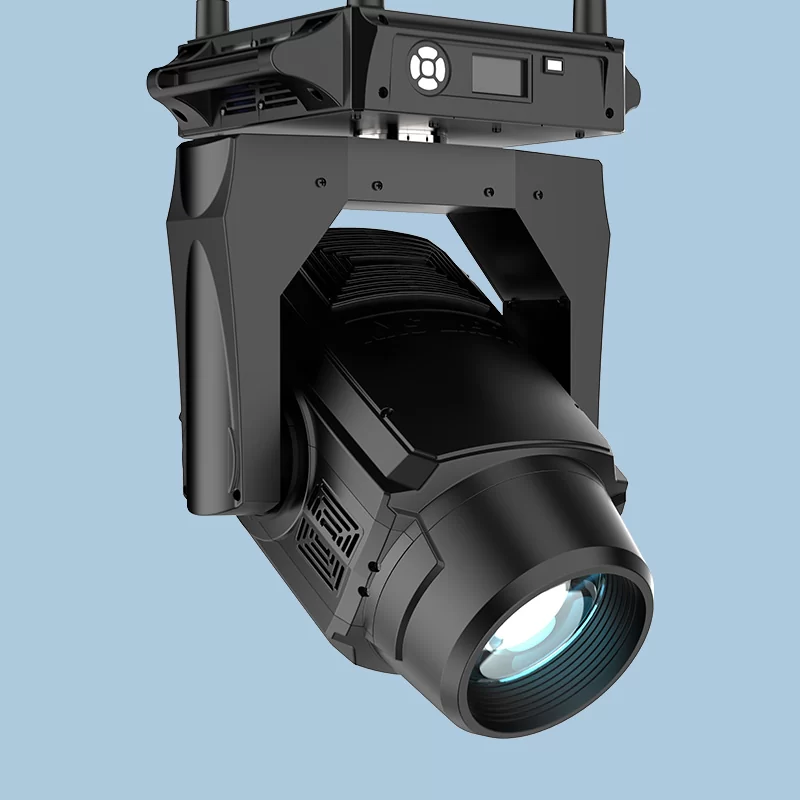
Evaluation checklist: how to decide
Use these three golden rules when finalizing your procurement:1. Prioritize control coherence: ensure your console and fixtures speak the same protocols and support firmware updates.2. Match output to sightlines: run throw calculations and check beam angle versus audience distance.3. Budget for lifecycle costs: include spare parts, calibration, and power infrastructure in total cost estimates.
Closing advisory and final thought
Measure the return in uptime and flexibility rather than just upfront cost. Expect measurable improvements in cue speed and visual clarity when you align fixture types with venue needs, and track power consumption before and after upgrades to confirm savings. The right choices reduce setup time, protect sightlines, and make programming less frantic.
Light Sky offers systems and fixtures that mesh control, optical precision, and service support—so the design you select becomes the practical solution on show nights. —

