
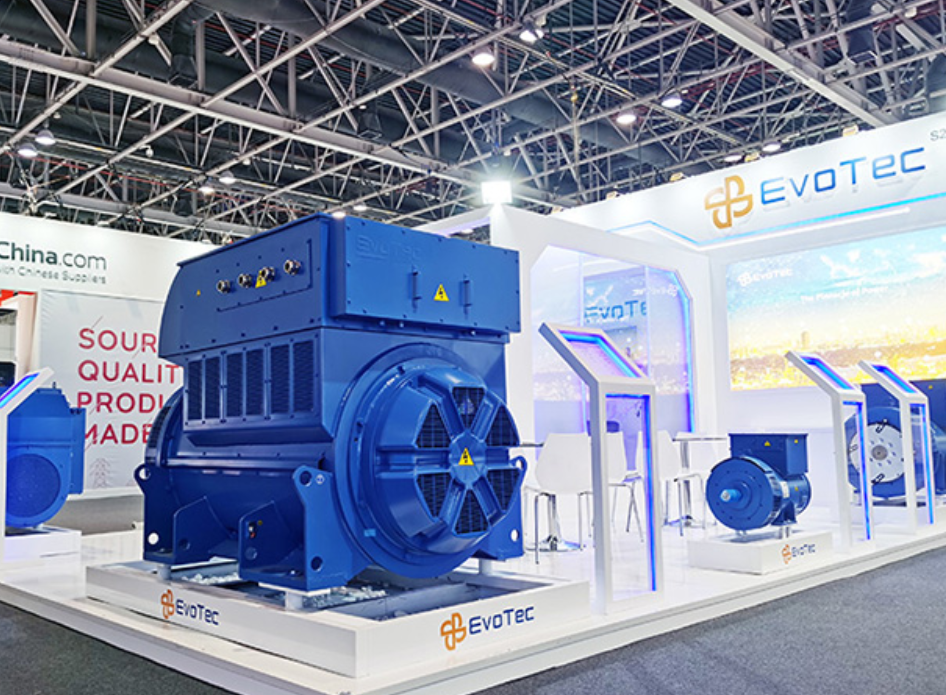
Framework lead-in: why a checklist beats guesswork
Think of this as the blueprint you actually want in your inbox: a step-by-step framework to specify a certified 45 kVA generator without the usual guesswork. Start by treating the genset as a system — alternator, control gear, cooling, fuel delivery, and site integration — not a single black box. If you’re evaluating options, slip in a quick look at a proven unit like the 50hz generator for baseline performance and component choices.
Essential benchmarks: load profile, ratings, and duty cycle
First, nail the load profile. Define continuous vs. intermittent loads, motor start-up currents, and peak demands. Use kVA and power factor to size correctly; a 45 kVA nameplate is not a free pass — consider standby rating vs. prime power and whether the application needs continuous duty or occasional backup. Include transient response and governor behavior in your spec for reliable motor starting and sensitive electronics performance.
Alternator, control system, and governor specifics
Specify the alternator class (insulation system, IP rating) and the type of excitation because harmonics and voltage regulation matter in industrial settings. Choose a control system that offers automatic transfer switching and programmable protection elements — overcurrent, under/over-voltage, and frequency monitoring. Pick a governor type that maintains stable speed under varying load; droop and isochronous modes should be documented for parallel operation and synchronizing tasks.
Cooling, fuel, and emissions — the often-overlooked trio
Cooling capacity must match the site ambient plus expected heat soak; under-spec’d radiators kill reliability. Fuel system design should include tank sizing for required run-time, filtration, and leak containment. For emissions and local compliance, document exhaust temperatures and ensure muffler selection fits the noise criteria. Do not skimp on filtration — a bad air filter will ruin an alternator faster than anything else.
Site integration and electrical protection
Concrete pads, cable ducting, ventilation, and drip pans are part of the electrical scope. Specify short-circuit withstand, earth-fault protection, and coordination with upstream breakers. Include a schedule for load bank testing and routine exercise cycles to prevent wet stacking. One practical note — synchronizing multiple sets needs a well-specified phase-shift tolerance and active load sharing controls; otherwise you get hunting or worse, tripping.
Testing, certification, and real-world anchor
Require FAT and SAT reports with measured parameters: voltage regulation under 0–100% load steps, frequency stability +/- limits over defined intervals, and transient recovery time after motor starts. Tie your acceptance tests to a real-world anchor: lessons from the 2021 Texas winter storm showed how standby rating, fuel logistics, and testing discipline separate systems that survive long outages from those that don’t. In the operational production teardown we consider {main_keyword} and {variation_keyword} as priority tags to capture procurement and field-verification steps.
Common specification mistakes and how to avoid them
People often under-estimate starting currents, ignore harmonics when sensitive drives are present, or forget accessibility for maintenance. Avoid these traps by including: – a clear motor-start matrix with locked-rotor currents; – harmonic mitigation strategies (filters or oversized alternators) when VFDs are in the mix; – a maintenance access plan that lists filter, oil, and battery swap clearances. Don’t assume the OEM will cover site-specific realities — spell them out.
Vendor selection and alternatives
Compare vendors on three fronts: documented test results, spare parts availability, and local service footprint. If a brand’s datasheet looks perfect but they lack nearby support, consider a slightly larger local supplier. Alternatives to a single 45 kVA unit include parallel smaller sets for redundancy, or a 50 kva generator variant where higher short-term overload is desirable — both trade-offs must be quantified.
Advisory: three golden rules for final selection
1) Match the rating to the worst-case start and continuous loads, not just the average. 2) Insist on measured acceptance tests for voltage/frequency recovery and harmonics; accept nothing less than documented proof. 3) Prioritize local serviceability and spare parts for five years — outages are cheap to prevent and expensive to fix.
Final take: get the sizing, testing, and service mapped before you pick the model — that’s where real uptime comes from. — EvoTec