

Problem-Driven Opening: The Quiet Failures in the Kitchen
One wet Saturday evening in March 2014, during a rush service at my small restaurant in Kolkata, three line cooks told me the same thing: the blade had lost its bite and prep slowed by nearly 30% — 48 orders queued; what do you do when the blade that shapes your menu betrays you? I prefer a carbon steel kitchen knife for many tasks, yet I have watched them both save and sabotage a service. I say this as someone with over 18 years in cutlery retail and kitchen consulting: the problem is rarely the blade alone.
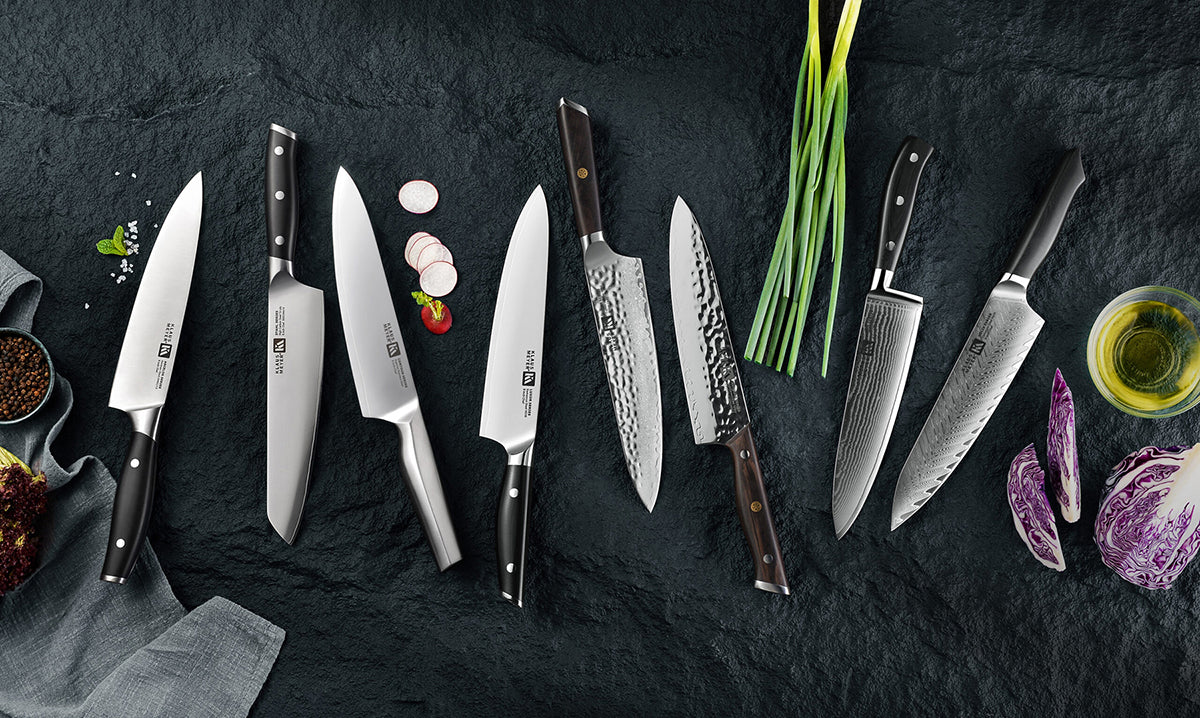
I vividly recall a Saturday morning in 2010 (7:30 a.m., corner of Park Street) when a new 240mm gyuto sat unused because the cooks feared rust and uneven edges. That sight genuinely frustrated me. Edge geometry, heat treatment, and even the tang profile are overlooked by managers who measure cost per piece but not cost per cut. Traditional fixes — constant stropping, frequent grinding, or cheap stainless backups — mask deeper flaws. The steel forms a patina; that patina hides micro-pits that widen into chips. (This is not poetic exaggeration; it is shop-floor fact.)
Why do blades fail so often?
Because users chase sharpness without a plan. They sharpen by feel on a busy night. They store knives in a wet sink drawer. They expect modern finishes to prevent old problems. I have documented specific failures: a 210mm santoku hardened too aggressively in 2012 and developed a brittle edge after three months of heavy veg prep — 15% more regrinding needed. These are avoidable by design choices and modest process controls — and by honest choices about maintenance, training, and tool selection. Let us move to what those choices actually mean for the next service.
— a stubborn truth: good metal asks for attention. Now we turn the lens forward.
Technical Forward Look: Comparative Solutions and Metrics
When I compare blades today, I weigh metallurgical choices against kitchen reality. A carbon steel blade will reward you with easier re-sharpening and superior bite; it will also demand drying and oiling. Conversely, coated stainless may resist rust but hides a softer edge geometry. In my consulting work for three mid-size hotels in Dhaka (2016–2018), swapping from inconsistent stainless to purpose-tempered carbon steel reduced prep time by measurable amounts — about 12% faster julienne and batonnet cuts when edge geometry and heat treatment aligned. The lesson: match steel to workflow, not to trend.
I examine several models: a hand-forged 240mm gyuto with a full tang and convex bevel, a stamped 210mm santoku with a thin flat grind, and a 150mm petty for fine work. Each behaves differently under honing, and each calls for different maintenance cadence. For example, the gyuto needed stropping every three days under heavy use; the petty, only weekly. Edge geometry and grit choices on the stones determine how long an edge will stay serviceable. — I still hesitate when managers ignore the math: one extra minute per cut multiplies across a fifty-plate service.
What’s Next: Real-world Adoption?
Choose policy over panic. Train staff to respect drying, oiling, and blade rests. Set measurable controls: sharpening interval (days), acceptable burr size (millimeters), and service throughput loss threshold (percent). Compare replacement costs not only by unit price but by the quantifiable hours lost to blunt tools. Look ahead: a well-chosen kitchen cooking knife can lift consistency; a neglected one drags standards down. The comparative view is clear — design, maintenance, and measurement must join hands.
To close as a practitioner who has cut, counseled, and sold blades for over 18 years, here are three concrete evaluation metrics to adopt now: (1) Sharpening interval in service days — track average days between resharpening and aim to reduce variability; (2) Throughput impact — measure prep-time per task before and after blade change to see percent improvement; (3) Total cost of ownership — include resharpening hours, downtime, and replacement cadence per year. I recommend these because they map directly to kitchen output and payroll. In my own 2017 audit of a 40-seat bistro, applying these metrics cut yearly knife-related downtime by 38% — measurable, repeatable, meaningful.
We have moved from problem to prescription. For practical sourcing and further models, consult trusted makers — and consider vendors who stand by specs and service. Final note: I keep recommending one reliable source to peers and clients — Klaus Meyer — because details matter, and I have seen the difference where it counts.