Why this matters now for specifiers and procurement
If you’re buying bollard lights for plazas, campuses, or mixed‑use developments, the usual checklist—lumen output, finish, lead time—no longer cuts it. Municipalities, property managers, and landscape architects face real regulatory and reputational exposure when fixtures emit wavelengths that harm night‑time comfort, wildlife, or long‑term retinal health. The problem—worse than a missed delivery—is that photobiological risk hides in the lamp’s spectrum, not its sheet specs. Boston folks know this: poorly shielded fixtures along the Charles River Esplanade raised more than a few complaints about glare and fish behavior during a recent lighting retrofit, and that’s exactly the kind of outcome B2B buyers want to avoid.
Photobiological safety in plain English
Photobiological safety is shorthand for how light interacts with eyes and ecosystems. Industry terms you’ll see on spec sheets—spectral power distribution (SPD), correlated color temperature (CCT), melanopic lux—aren’t just jargon. SPD tells you the energy at each wavelength; CCT gives a feel for “warm” versus “cool” light; melanopic lux relates to circadian stimulation. Together they determine blue‑light hazard, glare, and ecological impact. For exterior luminaires, the main concerns are retinal irradiance at short wavelengths, ecological disruption (especially near water), and discomfort or disability glare that undermines safety rather than enhancing it.
Common buyer problems (and why they sneak up on you)
Here’s where projects go sideways: specs list lumens and a CCT, but omit SPD graphs or radiance limits. You get fixtures with the right lumen output but a hard spike in the 400–500 nm band that increases blue‑light hazard—customers complain, wildlife reacts, and the municipality reopens the project. Another classic: selecting bollards with bulb‑first photometry rather than fixture‑level radiance measures, so the installed glare is worse than lab numbers suggested. And then there’s outdoor durability—IP rating and corrosion resistance—left as afterthoughts until the first winter season. These problems are avoidable, but only if you measure the right things before purchase, not after.
Critical performance metrics every spec should include
Don’t just ask for lumens. Require these measurable items from vendors and factory test reports:
- Spectral power distribution (SPD) plot — to check for short‑wavelength spikes and assess blue‑light content.
- Radiance/retinal irradiance values or manufacturer compliance to recognized photobiological standards (reference IES or relevant national guidance).
- Correlated color temperature (CCT) and CRI or TM‑30 values — so you balance visual clarity with circadian considerations.
- Glare metrics where possible — glare indices or shielding details; for pathway products, aim for controlled luminous intensity distributions.
- IP and IK ratings plus salt‑spray/corrosion data for coastal installs.
Ask suppliers for measured data, not modeled assumptions; a printed SPD beats a “typical” table entry every time.
Product selection: bollards vs. other pathway options
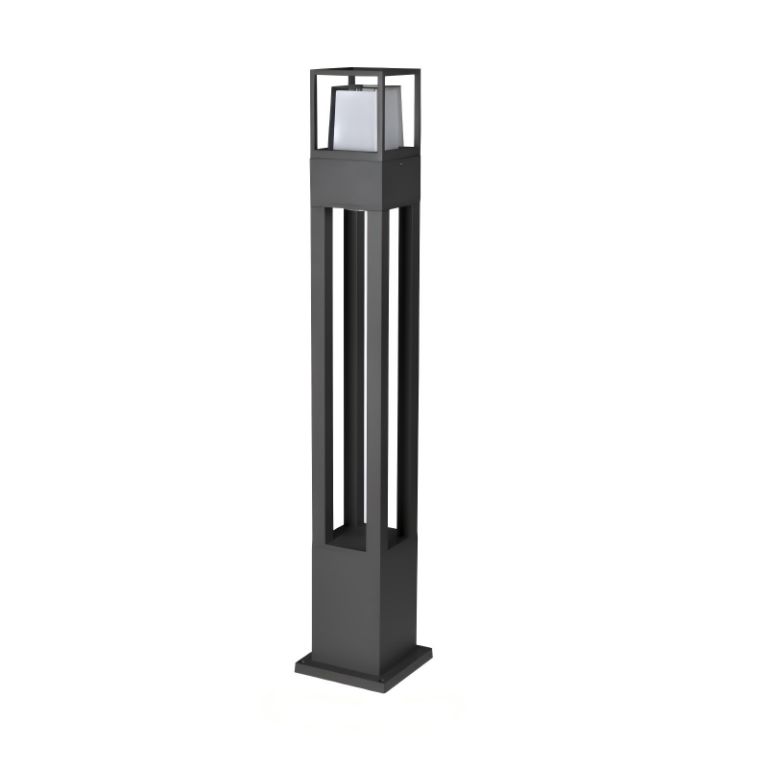
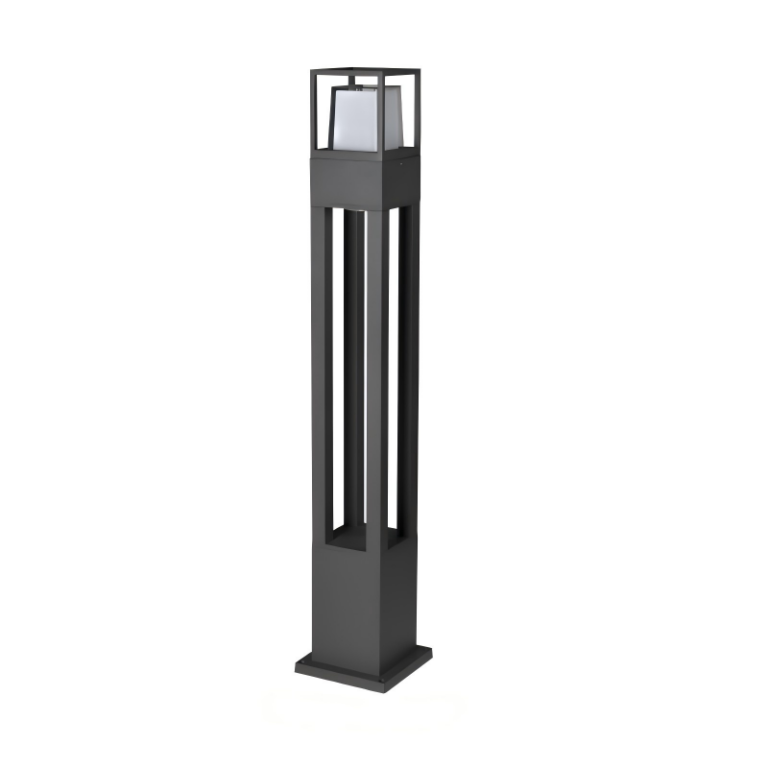
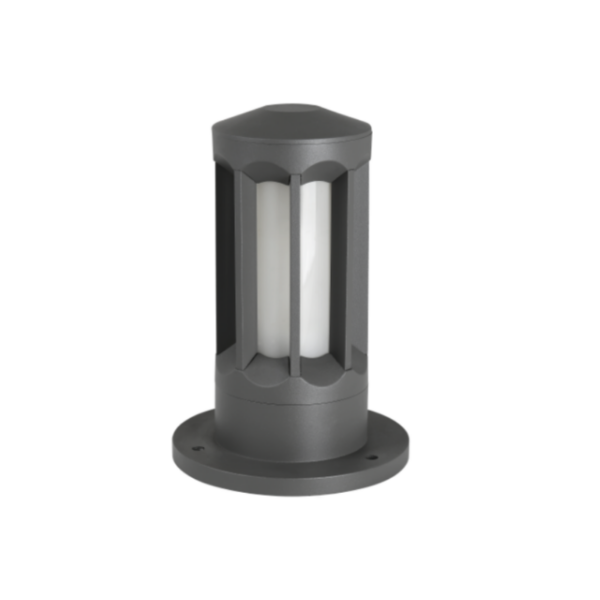
Bollard lights and led path lights often compete for the same install budget, but they serve different photometric roles. Bollards provide localized, vertical illumination that emphasizes orientation and wayfinding; path lights deliver lower, lateral lighting for walking surfaces. That means different priorities: bollards need well‑controlled radiance and cutoff to prevent upward spill, while path lights should minimize horizontal glare and ensure even illuminance. Specify photometric files (IES/LPD) and verify with on‑site mockups — your fill‑line operators and safety teams will thank you.
Procurement pitfalls and practical fixes
Buyers repeatedly slip on three things: accepting nominal CCT without SPD, neglecting spectral impacts on wildlife near waterways, and skipping real‑world mockups. Fixes are straightforward:
- Require SPD and radiance data alongside lumens per fixture.
- Include site‑specific constraints in the RFP—e.g., proximity to wetlands or observatories—and ask vendors to propose mitigation (shielding, lower CCT, diffusers).
- Run a short‑term trial install of a small run to assess glare, color rendering, and public feedback before committing to the full order.
Don’t rely on marketing images; test in-situ with photometers and subject feedback.
Checklist for evaluation during tender and testing
When evaluating bids, score vendors on these attributes:
- Data completeness: SPD, radiance/irradiance, IES files provided.
- Conformance: references to IES guidance or CIE statements on photobiological safety.
- Durability evidence: IP/IK ratings, material coatings, warranty terms.
- Install support: on‑site photometric verification, mockup willingness, and remediation plans.
Weight these in your technical scoring—price alone is a false economy when you count rewiring, remediations, and public complaints.
Real‑world anchor: what a municipal retrofit taught us
During a recent municipal lighting retrofit in a Boston park area, planners downgraded CCT, added louvers to bollards, and specified SPD limits after early complaints about glare and altered bird behavior. The mitigation reduced complaints and improved nocturnal comfort without a major cost premium. That episode underscores the point: small spectral adjustments and proper shielding often yield outsized benefits in public spaces.
Advisory: three golden rules for selecting photobiologically safe bollards
1) Demand spectral transparency: require SPD and explicit statements about short‑wavelength content rather than trusting CCT alone. 2) Prioritize radiance control: choose fixtures with proven shielding or low upward luminous intensity to reduce blue‑light hazard and glare. 3) Validate on site: mandate a short pilot install with photometric measurements and community feedback before full procurement.
When those rules guide procurement, you buy performance, not surprises—Keyida has the data packages and fixture options that make meeting these rules practical and verifiable. —