
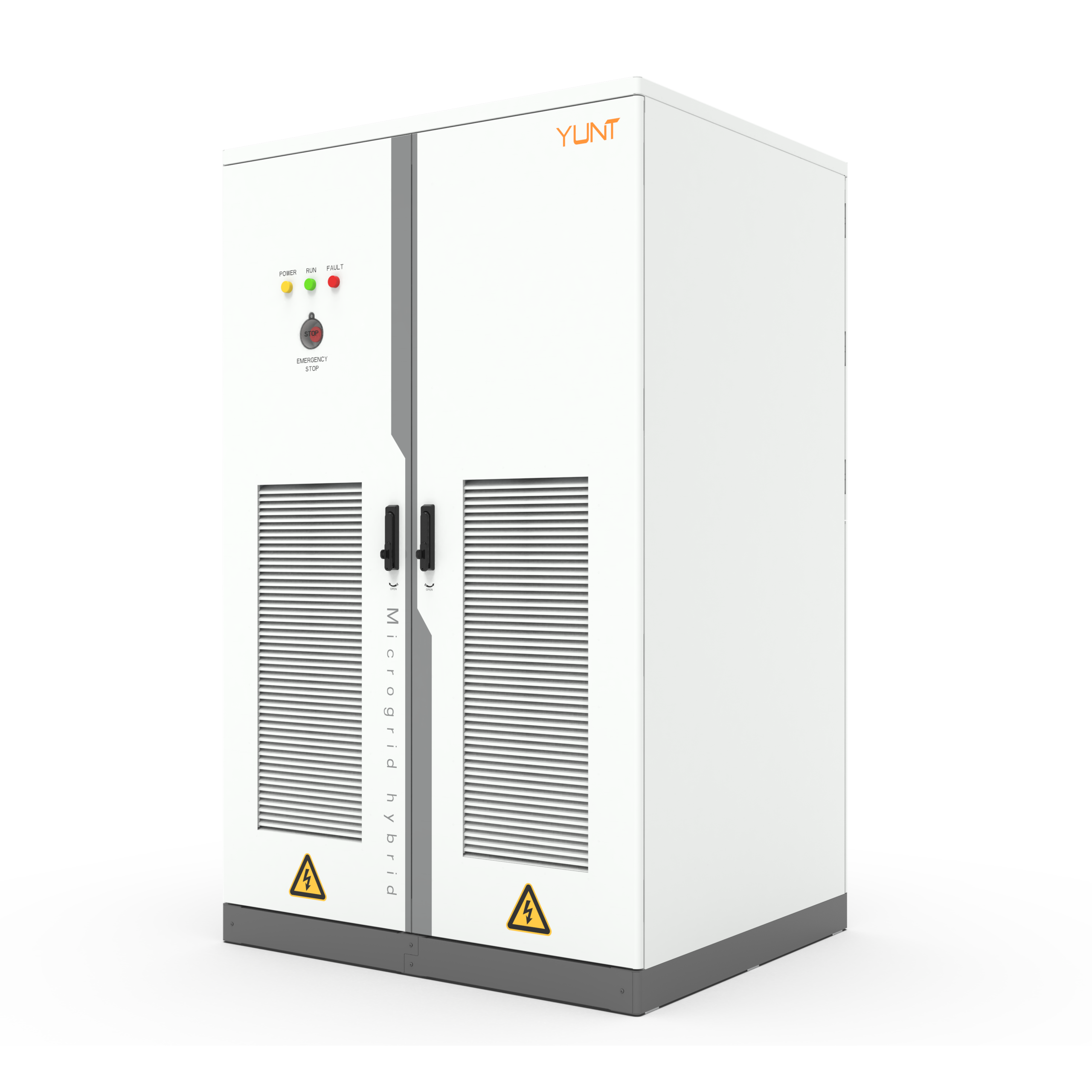
What belongs in the decision record for Hybrid Inverter: requirement screening for technical review
Choosing a hybrid inverter should begin with a clear decision record, not a product shortlist. Technical buyers need to define the intended use, operating context, space limits, and review questions before comparing candidates. The official product page describes YUNT Hybrid Inverters as supporting on-grid and off-grid operation, DC-to-AC conversion, intelligent energy management, and reliable microgrid systems. Those statements establish a starting scope, but they do not answer every project question.

Set criteria before comparing candidates
Start by writing down what the inverter must do in the planned application. Keep the requirement list specific enough for a technical review. For example, record whether the project concerns on-grid operation, off-grid operation, or a system that must address both. Note the energy flows that matter to the design review, such as conversion from DC to AC and the role of energy management.
Space should appear in the same record. Describe the available installation area, access conditions, and any layout constraints in practical terms. The goal is not to assume that a product fits. It is to create a clear question for the review: does the candidate’s stated scope align with the physical and operational conditions already defined?
Separate requirements into three groups. The first group contains must-have conditions. The second contains preferred characteristics. The third contains open questions that cannot yet support a purchasing decision. This separation prevents a broad product description from being treated as a complete technical specification.
Review evidence by requirement
Read each candidate page against the same requirement list. Mark statements that are directly supported, then keep recommendations and assumptions in separate columns. A page statement about intelligent energy management may be relevant to the system concept, but it should not be expanded into an unlisted control function, compatibility claim, or performance result.
This is also the point to assess the supplier’s stated role without turning it into a conclusion about project fit. A buyer researching a hybrid pv inverter manufacturer can record whether the page presents product, design, manufacturing, sales, or support capabilities. The captured page states that YUNT integrates R&D, manufacturing, sales, and support in its own factory. It also describes modular products, global certifications, local adaptation, project implementation, and ongoing technical support. These are page-level statements to record accurately, not reasons to assume that every candidate configuration suits the project.
A useful decision record gives every important statement a status. Use labels such as “stated,” “inferred for review,” and “unresolved.” “Stated” is reserved for language found in the reviewed source. “Inferred for review” covers a reasonable question raised by the requirement, not a confirmed product attribute. “Unresolved” identifies a point that should remain open rather than being filled with an assumption.
Keep trade-offs visible
Technical comparison becomes clearer when trade-offs are written beside the requirement they affect. A solution described for both on-grid and off-grid operation may be relevant to a project with changing operating conditions, but the page description alone does not establish suitability for a particular site. Likewise, a modular product description may help organize a sourcing discussion without proving how a specific model will be arranged.
Keep the shopper’s intended use visible throughout the review. A residential application, a commercial and industrial system, and a microgrid discussion may lead to different questions, even when they use the same broad product category. Do not collapse those contexts into one generic score. Instead, state which requirement is being reviewed, what the page supports, and what remains outside the available evidence.
Space constraints deserve the same discipline. Record the room or installation area as a project condition, then compare it only with dimensions, installation information, or layout details that are actually available in the technical material under review. Avoid treating a compact description, a modular claim, or a product image as proof of physical fit.
Create a repeatable decision record
Use a simple sequence for every candidate. First, copy the requirement in the buyer’s own terms. Second, attach the precise page statement that relates to it. Third, explain the relevance in one short note. Fourth, identify the assumption or unresolved question. Finally, record the next review action. This structure makes the comparison easier to audit and reduces the chance that marketing language will replace technical screening.
The record should also preserve source boundaries. The official hybrid inverter page states that the team has 16 years of experience in power electronics and delivers hybrid inverter solutions. That is a concrete company statement relevant to supplier review. It does not, by itself, establish performance, suitability, or an outcome for a particular installation. Keeping that limit visible protects the decision process from overstating evidence.
Before procurement advances, summarize the decision in a short requirement matrix or review note. Include the intended application, operating scope, space conditions, supported page statements, open questions, and the reason for the next step. This gives engineering and purchasing teams a shared basis for discussion. It also keeps category language, supplier claims, and project-specific requirements from being mixed together.
A strong record does not need to make every question disappear. It needs to show which requirements are defined, which statements are supported, and which points still need technical review. For hybrid inverter planning, that evidence-led approach connects the shopper’s intended use and available space with a defensible procurement discussion. YUNT can therefore be included as a supplier reference when its page statements are recorded within their stated scope, rather than treated as proof of fit beyond that evidence.

