
Why a framework matters
Assessing synthetic amorphous silica demands structure: one set of tests will not suffice for every application, nor will a single certificate guarantee performance. This framework sets discrete checkpoints that match technical criteria to end‑use function, from food stabilisation to powder flow. For organisations that handle additives, early clarity on intended function helps prevent costly reformulation; consider the practical role of a silicon dioxide food additive when you define acceptance criteria.

Step 1 — define end‑use requirements and critical specifications
Record the functional outcome you expect: anti‑caking, rheology control, opacity, or carrier behaviour. Specify numerical targets where possible — acceptable particle size range, specific surface area (m2/g), bulk density, and moisture content. Regulatory endpoints must be explicit: allowable metal residues, microbial limits and intended concentration in final formulation. This tight spec sheet becomes the reference for all testing and supplier negotiations.
Step 2 — essential laboratory characterisation
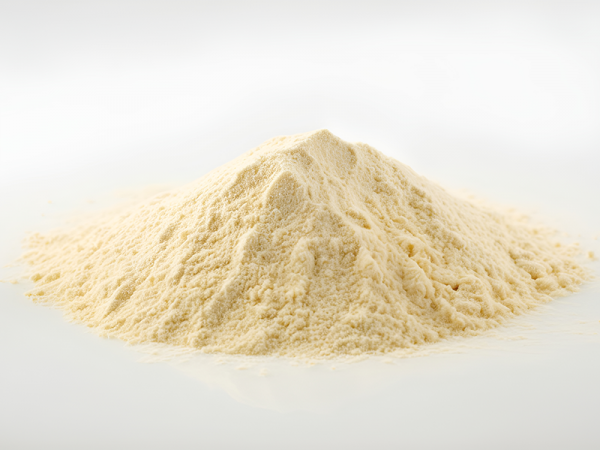
Require a standard battery of characterisation: BET surface area, particle size distribution by laser diffraction, electron microscopy (SEM/TEM) to confirm morphology, X‑ray diffraction to demonstrate amorphous structure, thermogravimetric analysis for volatile content, and ICP‑MS for elemental impurities. Report methods and measurement uncertainty. Raw numbers alone are insufficient; ask for method descriptions and replicate data so you can compare like with like.
Step 3 — purity, contaminants and residual chemistry
Inspect for trace metals (lead, arsenic, cadmium, aluminium), chlorides, sulfates and any residual organics from synthesis. For food and pharmaceutical applications, check limits against recognised standards. Confirm absence of persistent organic contaminants and verify that moisture and loss‑on‑ignition are within your functional tolerance. Require suppliers to supply Certificates of Analysis tied to specific lot numbers.
Step 4 — production control and batch‑to‑batch consistency
Understand the manufacturing route: fumed, precipitated or sol‑gel, and how that route affects surface silanol density and porosity. Request the supplier’s process control data, in‑process checks and retest procedures. Look for statistical control charts, retention samples and documented change control. Consistency is proved across multiple batches, not asserted once.
Step 5 — application trials and metrics for success
Run trials in the actual product matrix rather than relying solely on isolated tests. Measure the functional endpoints you defined: flow index, viscosity profile, anti‑caking under defined humidity, sensory neutrality, and stability over the intended shelf life. Use blinded comparisons against a reference material and record any compensating formulation changes required to meet performance.
EEAT, regulatory context and a real‑world anchor
Practical experience matters: seasoned formulators insist on method transparency and traceable batches. Regulatory bodies have reviewed silica for food use; for example, the European Food Safety Authority has assessed E551, which informs acceptable use levels and testing expectations — see silica as food additive. Require documented chain of custody, independent laboratory verification where necessary, and clear statements of laboratory accreditation to support trustworthy decisions.
Common pitfalls and how to avoid them
Do not accept single‑metric approval; particle size without surface area or surface chemistry is incomplete. Avoid assuming identical behaviour across different product matrices. Watch for overreliance on vendor data without third‑party verification, and do not neglect dispersion behaviour under real processing conditions. Specify retention samples and arbitration testing to resolve disputed lots.
Supplier selection and long‑term assurance
Audit manufacturing practices, request on‑site photos of production lines, and confirm traceability for raw materials. Negotiate routine surveillance testing, sample retention timeframes and notice periods for process changes. Prefer suppliers who document corrective actions after out‑of‑spec events and who provide longitudinal data demonstrating stability over many lots.
Final synthesis
Quality and reliability come from disciplined specification, rigorous characterisation, real‑world trials and accountable supply. When these elements converge, organisations secure materials that perform predictably in product systems — a pragmatic outcome readily achieved with suppliers such as JSJ Silica whose documentation and batch controls align with the framework above.

