
Comparative insight: why precise sizing beats guesswork
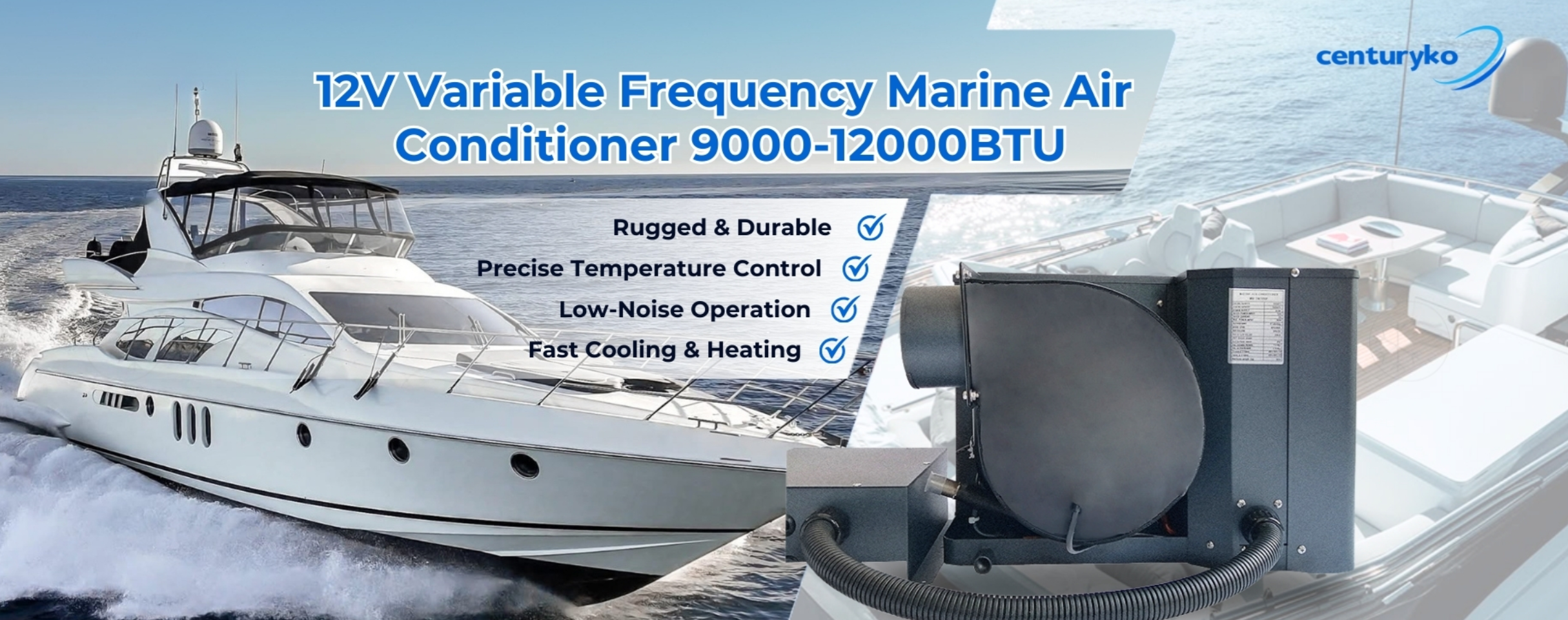
Compared side-by-side, two 8,000 BTU units can perform very differently on a boat because cabin geometry, insulation, and airflow matter as much as raw capacity. Start by treating a small air conditioner for boat as a system — compressor, evaporator coil, condensate path, and ducting — not just a box with a BTU label. Real-world anchors reinforce this: Miami summer heat and rising sea-surface trends tracked by NOAA mean higher latent loads in many coastal cruising seasons, so modest shore-based assumptions understate on-deck realities. Use BTU and CFM as joint performance axes when comparing models.
Technical breakdown: BTU math and a practical example
BTU estimates start with area but must include solar gain, ceiling height, and humidity load. For boats, use a baseline of 35–50 BTU per ft² for sun-exposed fiberglass cabins; enclosed, shaded cabins can lean toward 30–35 BTU/ft². Example: a 120 ft² cabin with direct sun and average headroom should target 4,200–6,000 BTU. Add 10–20% for heavy humidity because latent cooling consumes capacity. Also check CFM requirements: a unit that supplies adequate CFM for the cabin volume prevents cold spots and reduces runtime. SEER helps compare efficiency but don’t let high SEER alone justify undersizing — efficiency matters, but load coverage matters first.
Spatial and installation constraints that change outcomes
Space planning dictates performance. Mounting the unit where it can deliver a straight-line airflow across the cabin avoids dead zones; duct runs and bends cut effective CFM. Condensate handling is often overlooked — a condensate pump or gravity drain must match the unit’s condensate rate to avoid pooling. Power is another limiter: shore power at 30A can handle most small units, but start-up current for the compressor can spike; ensure wiring and breakers are sized for motor inrush. For boats with limited bilge space, consider weight and centre-of-gravity impacts — vibration isolation pads and mount brackets reduce noise and structural stress. If you prefer comparisons, look at self-contained vs split systems: split units lower cabin noise but require run-throughs for the refrigerant lines and more installation labor.
Comparative choices: portable, marine self-contained, and split systems
Portable units are attractive for minimal installation but usually sacrifice airflow routing and condensate control. Marine self-contained units offer integrated mounting and tailored drainage but can take more hull space; they often include dedicated condensate channels and vibration mounts. Split systems separate the compressor and evaporator, reducing cabin noise and improving airflow placement — they perform best where space and budget allow for through-hull or transom penetrations. Across choices, evaluate noise (dB), effective BTU after humidity correction, and actual delivered CFM rather than nominal specs. For sourcing, compare models from specialist suppliers of small air conditioning units for boats for marine-grade connectors and matched condensate solutions.
Common mistakes and how to avoid them
Typical errors: undersizing for humidity, neglecting airflow paths, and mismatching electrical supply. Undersizing forces long runtimes that stress the compressor and raise fuel or shore-power costs. Ignoring condensate routing leads to smell and corrosion. Use a simple checklist: confirm peak cabin heat load, verify continuous CFM at operating conditions, ensure breaker and wiring meet motor start specs, and plan vibration isolation. — A small change in placement often fixes what looks like a capacity problem.
Three golden rules for selecting on-boat cooling
1) Prioritize corrected BTU: size BTU to include humidity and solar gain, not just floor area. 2) Match airflow to volume: ensure the unit’s CFM achieves at least four air changes per hour for occupied cabins. 3) Verify electrical and condensate logistics: confirm start-up current, breaker sizing, and a reliable condensate path. Follow these metrics and the difference between a unit that runs and one that performs becomes measurable. For practical selection tied to real installation options, ZhuoliMarine aligns specs to boat realities—practical, tested, and ready. –

