
Quick straight talk
Parts fail when they get hot or wet, and PTC heater modules are no different — they drift, short, or just stop giving steady heat. If you’re responsible for incubation racks or cabinet systems you need to check the basics fast: heating curve, insulation, and endurance. Start by testing a sample with the same load as the real system, and make sure your incubator heating element behaves the same under load as on the bench.
The problem that drives every test
Temperatures that wander ruin processes. Uneven heat, slow warm-up, or sudden trips undermine reliability and cost time and product. Tests exist to catch the exact failure modes that cause those headaches. Testing isn’t paperwork — it’s finding what breaks first and fixing it before the client calls you at 2 a.m.
Common failure modes to watch
Short circuits from degraded insulation, PTC drift that changes heat output over time, cold spots from poor contact, connector corrosion, and mechanical damage from vibration. Each failure type needs a specific test so you don’t miss the root cause.
Electrical tests you must run
Measure cold resistance and compare to spec. Run insulation resistance and dielectric with the specified voltage. Do leakage current checks to catch moisture paths. Verify overcurrent behavior — PTCs self-limit but can still fail if not sized right. Finally, do connector contact resistance; a high-value contact will make a hot spot.
Thermal performance checks
Record heat-up time to target and time-to-stability. Map surface temperature across the module with thermocouples or thermal camera while under normal load. Run thermal cycling — repeated heat/cool cycles reveal solder cracks and delamination. Measure steady-state variance over several hours to spot drift.
Environmental and mechanical tests
Humidity soak and damp-heat tests expose insulation and corrosion problems. Vibration and shock tests find mechanical failures in mounting and leads. If the device will see dust or salt, include a filtration/salt-fog check. Tests must match the real operating severity, not lab ideal conditions.
How to set pass/fail criteria
Define limits for resistance change, temperature deviation, and insulation breakdown that relate to safe operation. Example: resistive drift under 5% after 1,000 cycles; steady-state temp within ±2°C of target; insulation resistance above specified megaohm value. Use statistical sampling: batch testing with AQL thresholds keeps inspection practical.
Practical test setups that work on the floor
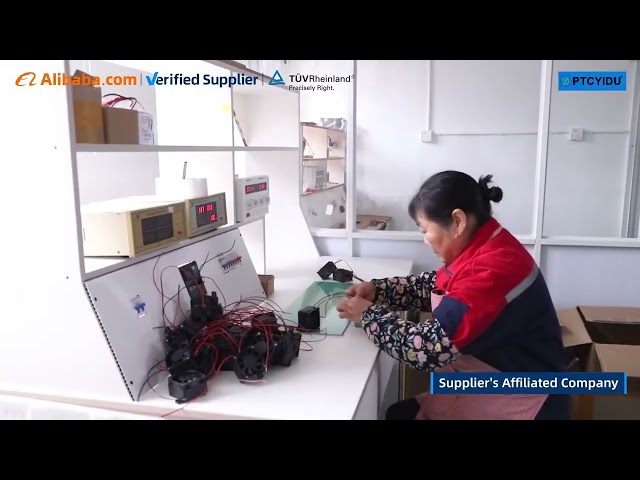
Don’t overcomplicate. Use a controlled power supply, data-logging thermocouples, and a humidity chamber when needed. Test under real load and the actual mounting arrangement. Label every unit, keep run logs, and photograph failures for root-cause work. Automate pass/fail where you can — manual checks miss patterns.
DIY traps and common mistakes
Testing at no-load or with the part propped in air gives false positives. Ignoring contact resistance and focusing only on bulk resistance is a rookie move. Skipping thermal cycling to save time invites late-life field failures. And don’t trust one-off samples — variability bites you on serial production.
Alternatives and trade-offs
If PTC modules show limits for your application, compare them to cartridge heaters, nichrome elements, or silicone rubber heaters. Cartridge heaters give tight control and high watt density but need thermal protection; nichrome is cheap and simple but less self-limiting; silicone mats conform but can trap moisture. Choose by duty cycle, form factor, and failure tolerance, not brand hype.
Experience and real-world anchor
I’ve spent a decade testing heaters in Midwest hatcheries and field-installing systems for commercial incubators, so I know what fails first under heavy duty. That practical angle matters when you inspect heating hardware like a heating element for cabinet incubator — labs tell you specs, the hatchery floor tells you which specs matter. Use field-proven tests and back them up with data logs you can show clients or auditors.
Where this gets you
Run the electrical, thermal, environmental, and mechanical checks that match how the part will be used. Avoid testing shortcuts and sample too few units. When you do this right you cut surprise failures and save time fixing things later. If you want a partner that understands the tests and the field realities, check the part sourcing and test support at PTCYIDU.

