
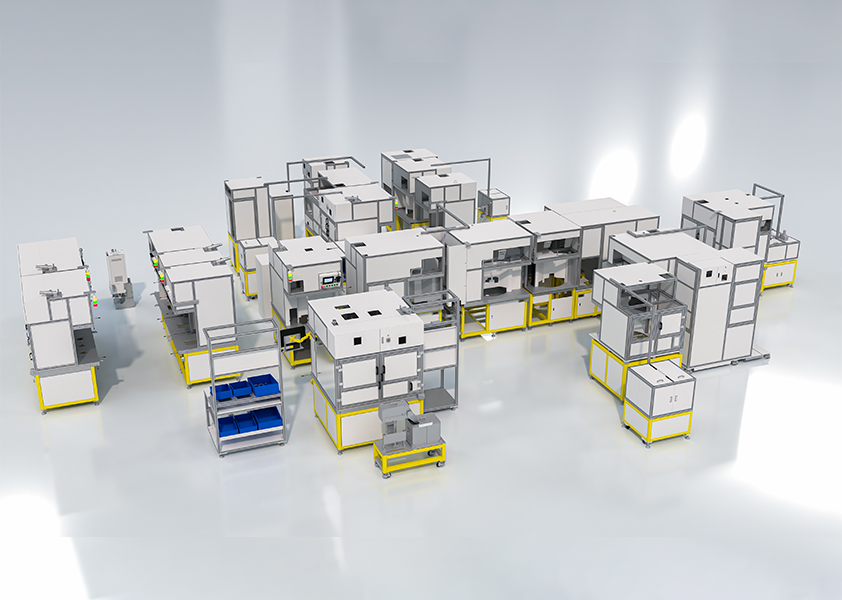
Problem first: what actually breaks the line
Production managers see the same failures: sporadic downtime, inconsistent quality, and control systems that can’t talk to each other. The fix isn’t glossy software or a single robot — it’s targeted fixes to control logic, data flow, and sequencing. For shops moving parts at scale, automotive automation automotive automation is no luxury; it’s the set of repeatable practices that stop surprises and keep takt time steady.

Diagnose: the frequent, solvable faults
Diagnose with the parts that wear most and the interfaces that fail most. Common, concrete problems:- PLC programs that grew with patches and now contain contradictory interlocks.- Hand-offs between legacy machines and newer cells that depend on fragile I/O wiring.- Blind spots: no machine-level metrics, only line-level counts.- Predictive data missing because sensors weren’t placed where forces, temperatures, or vibrations change first.A tactic-driven diagnosis spots the weakest link and measures it until the noise becomes a signal.

Targeted solutions that map to the problem
Apply controls and data where they remove the root cause. That means:- Standardize on clear field protocols (OPC UA, deterministic Ethernet) so devices exchange state without custom drivers.- Replace spaghetti ladder logic with modular function blocks and version control.- Add edge processors to pre-process telemetry and run local alarms, reducing latency and network load.- Use vision systems for early defect capture and closed-loop corrections.Practical deployments in Detroit’s assembly plants show these moves cut unscheduled stops. For teams designing line upgrades, consider proven methods for automotive manufacturing process automation that prioritize control determinism and data fidelity.
What trips teams up (and how to avoid it)
Common mistakes repeat because they look cheap at first:- Over-automating: adding robots without stable feed and part handling creates a bigger queue of failures.- Ignoring electrical and grounding practices; sensors lie when noise dominates.- Skipping acceptance tests that simulate degraded inputs.Avoidance steps: stage upgrades, validate each cell with failure-mode tests, and keep a rollback path for PLC code changes.
Concrete rollout steps and success metrics
Follow a short checklist that engineers can act on:- Map current state: sensors, control cabinets, network hops.- Define one measurable objective per cell (mean time between stops, first-pass yield).- Implement minimal hardware/software changes that directly affect that metric.- Run a 30-day shadow period where new logic runs in parallel and data is recorded.Measure results with clear counters: stop count per shift, cycle-time variance, and defect rate per 1,000 units. Field engineers value repeatable steps over grand plans.
Final synthesis: make automation solve specific production problems
Automation works when it reduces a concrete failure mode and fits the shop floor. Align control design to the weakest link, instrument where physics first changes, and validate with stress tests. Practical teams that treat automation as mechanical problem-solving — not a promise — get steady throughput and predictable quality, the same plain outcomes you see in systems managed by FHS.

