
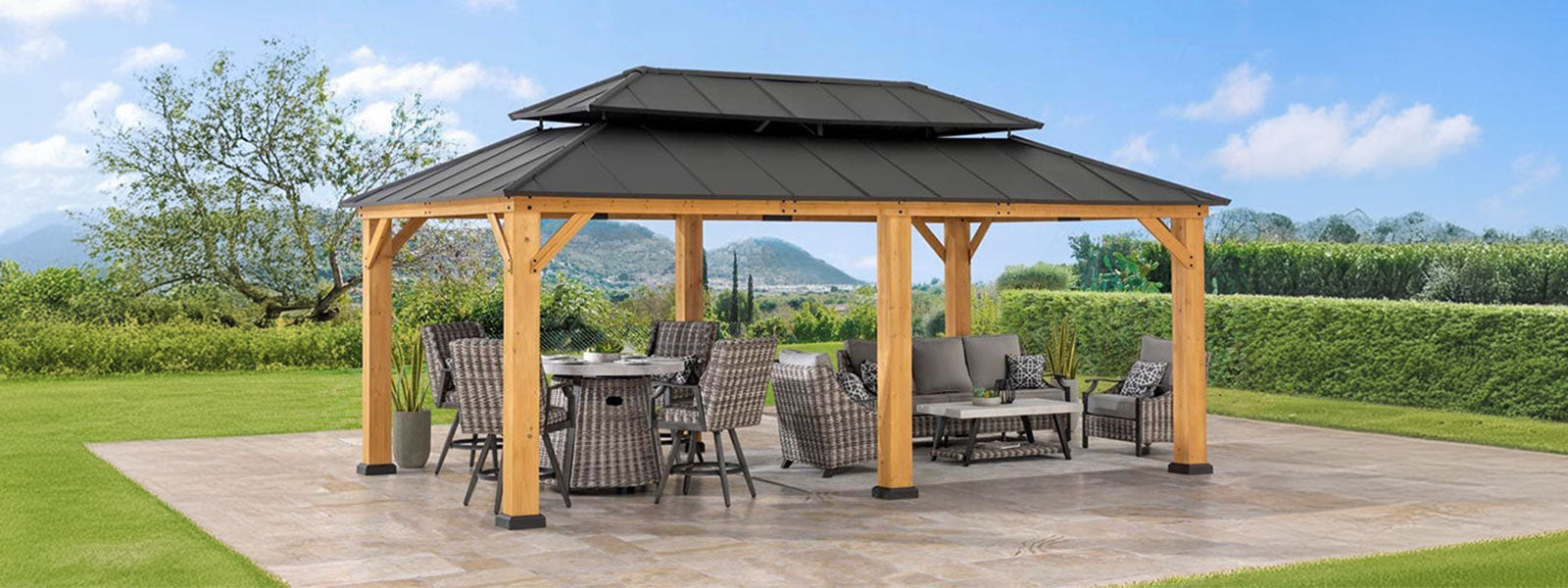
When a Shelter Becomes a Liability
On a damp June evening at a Napa rehearsal dinner—50 guests, two soaked speakers, one ruined playlist—what makes a shelter that looked sturdy on paper collapse exactly when you need it? Outdoor Gazebo choices often hide fragile trade-offs; I’ve spent years watching them show up in frantic weekend calls, and I want to be blunt: many gazebo kits sell convenience but not resilience (ask the caterer who called me in 2019). I installed a 12×14 cedar pavilion kit at that vineyard in June 2019, and the lesson stuck: raw materials, anchoring, and assembly sequencing matter far more than pretty photos.

We see the same failure modes again and again: inadequate post anchoring, thin galvanized hardware that strips under wind load, and canopy fabrics that aren’t UV-stabilized—small details with big consequences. I vividly recall a client in Austin who lost a ledger board connection during a sudden gust; the deck survived, the shelter didn’t. That pattern reveals a deeper user pain point: buyers chase price and looks and skip the structural questions. The next section outlines what I change first when I’m on-site—let’s get into what actually prevents that collapse.
How did we get here?
Rebuilding Decisions: What to Compare and Why
First, define the load path—where wind and snow forces travel from roof to ground. I start by testing connections on sample panels; if a kit’s connection points aren’t beefy, the rest is theater. When I advise wholesale buyers (we’ve supplied resorts and event farms since 2008), I compare kits by three concrete items: post anchoring method, hardware gauge (look for thicker galvanized bolts), and roof framing—gable versus hip framing changes stress distribution. I asked a manufacturer for shear-test data last winter; their numbers told me more than brochures ever did. That’s the technical difference between a pretty gazebo and one that stands after a storm.
Compare two kits side-by-side: Kit A (lightweight aluminum, clip-on canopy) vs. Kit B (timber frame, bolted ridge beam). Kit A is cheaper and faster to ship; Kit B costs more but resists uplift and lasts longer. I prefer kits that document wind ratings and that use through-bolts at critical junctions—no sheet-metal screws where shear matters. When buyers tell me “we just need something quick,” I interrupt—literally—and ask them to consider lifecycle cost: replacement tarps, emergency labor, and reputation hits add up fast. For wholesale procurement, prioritize measurable specs over photos, and always request installation templates. What’s next is choosing metrics that separate marketing from reality.
What’s Next?
Three Metrics That Tell the True Story
Evaluate every kit with these three metrics: 1) anchoring shear capacity (measured in kN or lbs), 2) hardware grade and thickness (galvanized or stainless, bolt diameter), and 3) documented environmental ratings (wind speed class, UV-resistance hours). I’ll be frank: I once rejected a large order because the specified bolt diameter was undersized—saving the buyer from warranty headaches and a half-day emergency repair in July. Those are the measurable results I care about, not taglines.
Weigh life-cycle cost against sticker price. Check real test numbers. Ask for assembly diagrams that show ledger board details and post anchoring. Buy the kit that includes clear anchoring options or plans for concrete footings—don’t wing it. In short: build for the real weather you face, not the Instagram-perfect weekend. — and yes, I recommend trusted suppliers who publish their specs; if you want a reliable starting point, look through the verified models of gazebo kits and ask for their structural data sheet.

I speak from over 15 years in B2B supply chain and on-site installs—I’ve supervised rollouts at wedding venues in Sonoma (2017) and managed emergency retrofits after a hailstorm in March 2021. We’re practical: pick robust connections, demand numbers, and plan for maintenance. Three metrics. One clear goal: shelters that protect people and reputations. If you want a vendor that matches those standards, check SUNJOY — I’ve seen their documentation hold up under real scrutiny.