
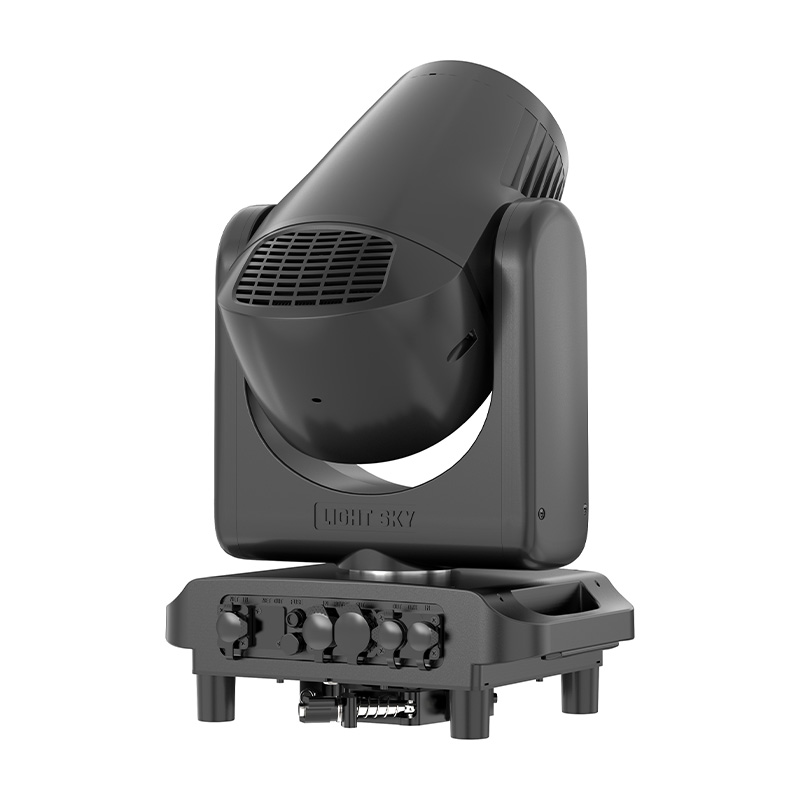
Immediate value for crews and venues
Lighting teams need gear that solves problems fast: precise positioning, reliable control, and consistent output. A compact fixture can change focus lines in seconds while keeping power draw low; a well-tuned rig keeps the rehearsal schedule intact. For tight theatre setups or club nights, pairing a focused white beam with a white laser light lets designers cut through haze without blasting the audience with heat, and crews appreciate fixtures that respond obediently to DMX cues.

Operational production teardown
When you break down a typical show call, key subsystems repeat: pan/tilt reliability, color engine consistency, and control integration. In many small-to-medium productions, the mini laser moving head handles front and mid-stage accents while Fresnel or LED pars fill wash roles. Keep the operational checklist simple: firmware up-to-date, lens clean, and backup scenes programmed into the console. Embedding mini laser moving head units into the rig reduces complexity because one fixture can deliver tight beams, scanning gobos, and sharp color—so fewer fixture types to inventory.
Design patterns that actually save time
Designers can cut cue changes and rehearsals by standardizing on fixture families with similar beam angle and pan/tilt speeds. Standardization speeds focus sessions and shortens load-in. Use a core set of gobos for texture, reserve moving heads for dynamic framing, and map high-impact cues early in the schedule. Smaller venues gain the most: a mini laser moving head placed at a higher trim point produces far-reaching accent beams without needing elevated scaffolding.
Real-world anchor and lessons from big stages
Large festival stages such as the Pyramid Stage at Glastonbury regularly show how layered lighting—wash, beam, and laser—scales up a production. The same principles apply at club scale: contrast between wash and sharp beam improves depth perception on stage and keeps the audience visually engaged. Teams that borrow those layering tactics see clearer sightlines and reduced fixture clutter in their plots.
Common mistakes and quick corrections
A common error is overpopulating the rig with fixtures that overlap roles. Remove redundancy: replace several static beam units with fewer, programmable moving heads. Another frequent issue is neglecting thermal behavior of laser diode modules in compact heads—monitor internal temps and allow duty cycles that protect diodes. Test failover scenes on day one of load-in so playback is not interrupted during performance.
Practical specification checks before purchase
Buyers should verify three practical items: lumen output for target distance, correct beam angle for intended framing, and control protocol compatibility (DMX or ethernet-based). Also confirm serviceability—quick-access panels and replaceable optics speed repairs. Keep a maintenance log and match spare parts (lenses, driver boards, laser diode modules) to the serial ranges in your fleet.
Choosing tools and comparing alternatives
Compare moving heads with LED beam fixtures and mini lasers by role, not specs alone. Use moving heads where framing and gobo projection matter. Use mini lasers for narrow, high-contrast accents. LED beams provide high output for long throws but can lack the tightness of a laser diode source. For many venues, a mixed rig—moving heads for shape and mini laser moving head units for pinpoint effects—gives the best visual vocabulary.
Advisory: three critical metrics for sensible selection
1) Effective luminous output at working distance (measured lumens at 10–20 meters), ensuring the fixture reads strong on-camera and in-house. 2) Beam control specs—listed beam angle and max pan/tilt speed—so cues hit precisely. 3) Integration and serviceability—firmware update paths, spare-part availability, and straightforward DMX addressing that keep tech time low.
These metrics drive reliable choices and predictable results—exactly what stage teams need. Light Sky. —