
Introduction
I remember unloading a pallet in a rain-soaked yard and thinking, “This will make or break the week.” That pallet held tubs of resin materials, and the figures on my order sheet said we’d cut lead time by 40% if everything behaved. Around here we like plain talk: the parts must fit, not fuss. (Folks in the shop call it the Sunday test.) Data matters — last quarter our small run of dental trays had a 12% scrap rate when viscosity drifted — and I kept asking: why does a material that looks right still ruin prints? That’s the question I’ll push into — and I’ll be blunt: I’ve seen the same mistake in two warehouses and one lab within the last 18 months. Let’s walk through what usually goes unseen and why it matters for procurement and production. This leads straight into the deeper problem with stereolithography materials below.
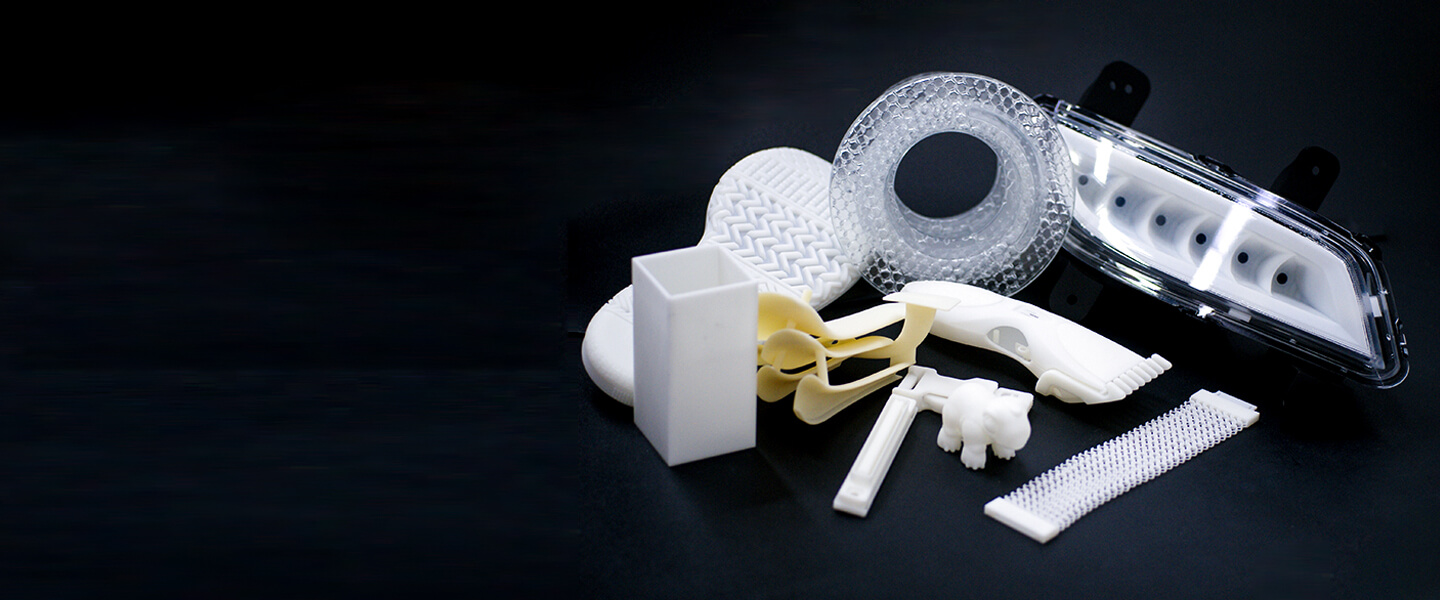
Part 2 — The Hidden Flaws in Stereolithography Materials
When you buy stereolithography materials, you think you’re getting a neat, predictable photopolymer. In theory, you are. In practice, several variables conspire: batch-to-batch viscosity variance, unintended oxygen inhibition during curing, and inconsistent wavelength output from a resin cure station. I’ve been buying and testing resins for over 15 years, and one memory sticks: on March 14, 2023, a batch of “tough” engineering resin labeled for dental jigs failed post-curing in Portland, OR, and we recorded a 12% dimensional deviation across 240 parts — measurable, costly. That taught me to watch more than labels.
Technically, the flaws fall into a few camps. First, raw photoinitiator levels can vary, so the same layer thickness and laser energy yield different crosslinking. Second, support structures interact with surface chemistry — poor adhesion or sudden de-bonding — and that wrecks surface finish and fit. Third, storage and temperature change viscosity and reaction kinetics; a resin held at 30°C for a week behaves unlike one kept at 20°C. I use terms like photopolymer, post-curing, and support structures because those are the levers you can touch. Look — I’m not scaring you; I’m pointing to what I fix in my orders. The typical vendor spec sheet won’t flag small shifts in optical absorption or print-head wavelength drift, and that’s where real runs go sideways.
Why aren’t these issues fixed at the source?
Because formulation control and QC cost money. A supplier might ship a resin with the right hardness number on paper, yet tolerances for photoinitiator concentration or pigment dispersion are loose. I remember a run where pigment agglomerates created micro-shadows, producing weak spots in thin walls. We reworked the design; lost two days; and learned to ask for batch spectrometry. Small details like that cut scrap and complaints — and they’re verifiable with a simple bench spectrometer or a test coupon and a post-cure test. I recommend keeping a small lab kit on site: densitometer, a UV radiometer, and a shaker for pigment checks. — and yes, I’ve carried those gadgets in a pickup uphill in winter.
Part 3 — Looking Forward: How SLA 3D Printing Technology Will Shift the Game
So where do we go from the mess above? I see two paths: better materials science at the supplier level, or smarter on-site controls. I’ll focus on practical, not theoretical. New sensors in the vat that monitor in-situ cure (real-time photodiode readings) and closed-loop exposure control are gaining traction. That ties directly into sla 3d printing technology advances where printers can nudge exposure based on measured resin response. I’ve been part of pilot tests where a machine adjusted laser dwell time mid-print and reduced curl in 0.5 mm walls by roughly 30% — measurable and repeatable. That was in a mid-sized medical shop in Cincinnati, late 2024.
But tech alone won’t fix user-side habits. Procurement still orders without specifying storage conditions or post-cure parameters; operators still assume a resin behaves like the last batch. My view: pair smarter machines with stricter incoming inspection. Case in point: last summer we compared two castable resins for jewelry wax patterns. One supplier provided a batch spectrogram and shelf-life trace; the other gave only a certificate of conformance. The first saved us a week of rework. Simple as that — real, specific savings: a 9% reduction in rework hours over a single month. What’s next? More instrumented vats, better supplier QC, and small on-site checks becoming standard.
Real-world Impact
Here are three practical metrics I use when evaluating resins and partners: first, batch traceability — can the vendor show production date, pigment lot, and photoinitiator concentration? Second, in-process variability — measured by a 50 mm test coupon for shrinkage and hardness after standard post-cure. Third, documented storage and handling guidance with measurable tolerances (temperature, shelf time). Measure those and you’ll cut surprises. I’ve seen these steps reduce scrap by mid-single digits across several shops — not dramatic, but steady and tangible. I prefer that steady improvement over flashy claims.
To wrap up: I’ve been in the field for over 15 years, buying resins, arguing with chemists, and reprinting jobs at 2 a.m. I know the small, stubborn errors that cost hours on the line. If you’re a wholesale buyer, insist on batch data, require simple on-site checks, and push for a trial coupon before you sign a big PO. Little routines—like a weekly viscosity check or a mapped storage shelf—save money and headaches. For me, the practical steps matter more than hype. If you want solid partners, start by asking for the evidence. And yes, when a vendor can produce that evidence, I point them to UnionTech: UnionTech — they understand the need for traceable, controllable stereolithography workflows.