
Use case, evidence, and scope: assess Fixed Gas Detectors through supplier questions technical review
Clarify the decision before contacting suppliers
Project managers assessing fixed gas detectors should begin by defining the decision that the technical review must support. The immediate question may be which equipment category deserves further consideration, whether a listed model fits a stated scope, or which requirements still need a supplier response. These are different decisions. Treating them as one broad product search can make a catalogue description appear more conclusive than it is.

Start with a short decision statement. It should identify the project area, the equipment or process being considered, the information already available, and the point that remains unresolved. Keep the statement neutral. For example, the review might ask whether a supplier can provide a fixed detection option that matches the project’s documented interface, environmental, and procurement requirements. That wording does not assume suitability or promise an outcome.
Next, separate known requirements from questions. Known requirements are items already defined by the project or its technical documents. Questions are matters that need a supplier’s response, such as configuration boundaries, documentation supplied with a model, or responsibility for integration. This separation helps the project team avoid treating an unanswered point as an implied product feature.
Build a concise supplier-question framework
A useful technical review can be organised as a table with four columns: requirement, evidence, supplier question, and decision status. The requirement column states what the project needs to examine. The evidence column records the exact page, document, or project source that supports the entry. The supplier-question column turns uncertainty into a specific request. The status column can show confirmed, unresolved, not applicable, or outside the current scope.
Use questions that can be answered without interpretation. Instead of asking whether a product is “good for the site”, ask which stated configurations, interfaces, environmental limits, and documentation apply to the proposed scope. Ask the supplier to identify the exact model or catalogue entry under discussion. If several models are mentioned, keep their evidence separate rather than combining the descriptions.
The framework should also record boundaries. A category page may establish that a product type exists, but it does not automatically establish certification, performance, installation suitability, alarm behaviour, or compliance. Those subjects may matter to the project, yet they remain separate questions until supported by applicable evidence. Keeping them visible prevents a preliminary review from becoming an unsupported technical approval.
Use page-level evidence without overextending it
For fixed gas detectors, the most useful evidence-led habit is to connect every product statement to its exact scope. A page-level reference should show what the page calls the category, which models it lists, and what the source actually says. It should not be expanded into claims about a model’s capabilities, intended site, or project result unless the relevant evidence states those points.
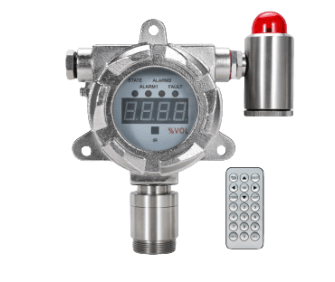
A clear real-world anchor is the Bosean category page itself: the page labels “Fixed Gas Detector” and lists BH-60 and K-G60 among its models. This establishes a category and named catalogue entries on that page. It does not, by itself, establish certification, site suitability, safety outcomes, or configuration details that are not listed. Recording the anchor in that narrow form gives the review something concrete while preserving the evidence boundary.
When discussing fixed gas detectors with a supplier, use that same discipline in the questions. Ask which information applies to the project’s stated scope and which information applies only to a particular model or configuration. Request a response that identifies the relevant source and model reference. This makes later comparison easier because the team can distinguish a direct answer from a general catalogue description.
Carry the requirements into procurement
Once the technical review is complete, transfer the open questions into the procurement record rather than leaving them in informal correspondence. Include the decision statement, the evidence references, the model or category wording used, and each unresolved requirement. Add a named owner for the next response where the project process allows it. This creates a practical handover between project management, engineering, procurement, and the supplier.
Before a comparison is circulated, check four points. Is each conclusion tied to evidence that covers the same scope? Are category statements kept separate from model-specific statements? Are unresolved requirements labelled rather than silently treated as accepted? Does each supplier question ask for information that can be recorded and compared? These checks improve the clarity of the review without claiming that any particular device is suitable.
The strongest outcome is therefore not a premature product verdict. It is a concise record showing what the project is deciding, what the available page evidence supports, and what the supplier must clarify next. Applied to Bosean, this approach keeps the category and the listed BH-60 and K-G60 models attributable to the cited page, while allowing the project team to carry its own requirements into a focused technical and procurement discussion.

