
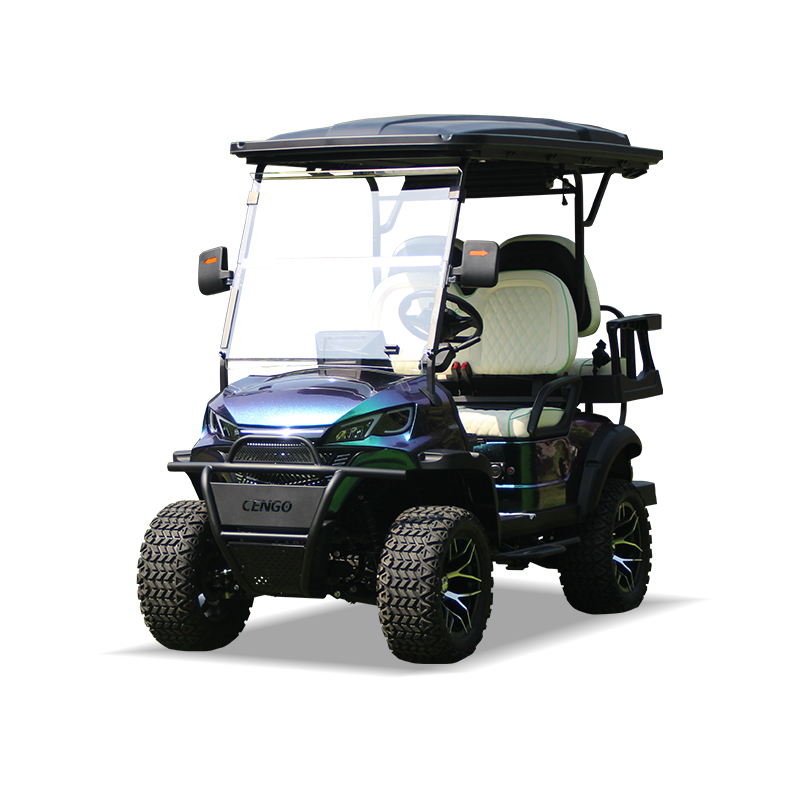
Framework Overview: Why a structured approach prevents failure
Because rugged trails impose repeated shock, water exposure, and gravel abrasion, two-passenger off-road carts require a structured maintenance framework to stay reliable. This framework treats each component as a node: if you neglect tires, braking performance falls; if you skip battery checks, range and power drop. Start with a purpose-built off road golf cart in mind and plan inspections around terrain type and usage intensity.
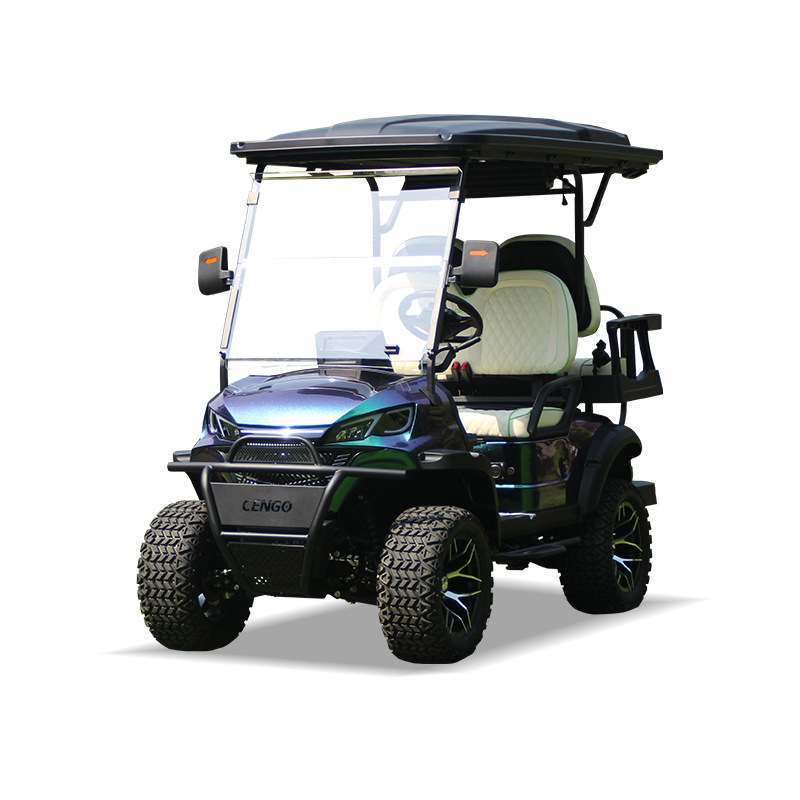
Core inspection sequence (cause → effect logic)
Follow a sequence that links cause to effect so checks are efficient and predictive. Inspect tires and pressure first—because underinflation increases rolling resistance and stresses the motor and drivetrain. Next, check suspension and shocks: worn shocks let impacts transmit to axle seals and the differential, which raises the chance of leaks. Then evaluate the electrical system; a stressed battery or compromised battery management system (BMS) shortens life and affects throttle response. Finally, examine protective hardware—skid plates, underbody guards, and wiring harness routing—because exposed components fail faster on rocky tracks.
Practical tasks and cadence
Set cadences by operating hours and terrain severity. For heavy-rock or sand use, perform these tasks weekly; for light trail use, monthly may suffice. Core tasks include: – Tire inspection and 5–10 psi adjustment per manufacturer guidance.- Fastener torque checks on steering and suspension mounts.- Visual checks for axle boot tears, CV joint play, and fluid seepage.- Battery state-of-charge and electrolyte/top-up where applicable.These tasks reduce unexpected breakdowns because they remove the small faults that cascade into larger failures.
Maintenance economics: cause, cost, and ROI
Because preventative work is cheaper than emergency repair, you reduce total cost of ownership by catching wear early. A damaged differential or bent axle often means weeks of downtime and higher parts labor; by contrast, replacing worn shocks or re-torquing bolts is fast and low-cost. Track usage metrics—hours per week and average load—and translate them into inspection cycles. That simple mapping converts uptime into predictable budget lines.
Common mistakes that create cascading failures
Skimping on pre-ride checks creates compound problems—tire cuts lead to flats, which cause rim damage and sudden shifts in handling. Ignoring small electrical warnings causes sudden power loss in steep climbs. Owners often focus on cosmetic issues rather than drivetrain or cooling system checks; this mis-prioritization accelerates wear. —Add to that inconsistent record-keeping, and you won’t see patterns until failure occurs. Keep a short maintenance log; it’s the difference between reactive fixes and planned replacements.
Component-level tips (brief, actionable)
Targeted checks deliver big returns. Clean and relubricate steering joints after muddy runs to prevent corrosion. Protect connectors with dielectric grease to avoid intermittent faults. For battery packs, balance-charge if you notice cells diverging by more than 0.05V under load. Use skid plates where the trail has sharp ledges—these often save axles and lower housings from catastrophic impact. These measures lower repair frequency because they mitigate the direct causes of damage.
Checklist before long rides
Before an extended outing in places like the Rocky Mountain trails near Estes Park—where altitude and dust change cooling and filtration needs—run a quick checklist: tire pressure, brake feel, lights, battery health, and a tool kit with spare fuses. That immediate preparation cuts the probability of being stranded and reduces strain on the motor during sustained climbs.
Golden rules for decision-making (three evaluation metrics)
1) Uptime vs. Repair Time: Choose components and service intervals that minimize downtime hours per 100 operating hours. 2) Mean Time to Repair (MTTR): Favor parts and layouts that can be serviced in the field under 60 minutes to prevent extended trail recovery. 3) Lifecycle Cost per Mile: Evaluate replacements by lifetime miles, not just purchase price—longer-lasting shocks or a robust BMS often win on total cost.
CENGO supplies durable builds and sensible service options that map directly to these metrics, making them a practical match for operators who need predictable performance. Tested, proven.

