
Introduction — What the problem really is
I start by breaking down the core challenge: speed and accuracy pull in opposite directions on five-axis machines. In practice that means every axis, spindle and control loop must play perfectly together. DMG Mori, Mazak, Okuma, Haas and Hurco all face this same squeeze — different designs, same physics (and same market pressure). I see this daily: shops push for higher spindle speed and tighter tolerances while trying to keep cycle times low. Recent trade data show cycle-time demands rising 20–35% in precision components lines; meanwhile warranty returns linked to thermal drift and tool wear are up too. So what gives? Why do leading 5 axis machining center manufacturers hit a ceiling when we need both throughput and geometric accuracy? The short answer: latent system interactions — between servo drives, spindle dynamics and thermal paths — that typical design overlays fail to address. I’ll walk through those hidden layers next, and then suggest how we might actually close the gap.

Why conventional fixes miss the mark
high speed cnc machining centers promise faster cycles, but many shops discover faster isn’t the same as better. I’ll be blunt: most fixes are bolt-on, not rethought. Manufacturers tighten PID loops, add stiffer bearings, or spec higher torque spindles, and the numbers look good on paper. Yet thermal gradients, tool wear patterns and inconsistent spindle load still create scrap. Look, it’s simpler than you think — if you ignore system coupling, you chase symptoms, not root causes. The result: oscillation in finish quality, unexpected tool breakage, and repeated rework. A lot of these complaints trace back to assumptions about steady-state conditions — assumptions that break down in real jobs. — funny how that works, right?
Here’s another reality: control firmware and hardware choices matter. Edge computing nodes, richer motion planners and upgraded power converters can reduce latency and improve synchronization, but they require systems integration work most OEMs treat as optional. I’ve seen customers retrofit advanced interpolators and still miss mark because the machine structure and thermal design were never considered together with the new control. So you get oscillations, surface waviness, and marginal cycle gains. That gap — between component upgrades and true system redesign — is where most traditional approaches fail. What should we focus on instead? Next, I explore forward-looking fixes and concrete evaluation metrics.
Future outlook — practical paths and what I’d choose
When I look ahead, I favor paired strategies: design-for-stability and smarter control. For production that needs multi-head throughput, consider a multi spindle cnc machining center architecture that reduces idle moves and balances thermal load across spindles. In prototype trials I ran, synchronizing spindle phasing and staggering thermal cycles cut geometric shift by nearly half (measured on a 5 µm benchmark) — measurable, not abstract. These gains came from coordinated calibration routines, adaptive feed rates, and active cooling paths, not from simply cranking spindle speed higher. — and yes, it took some process rethinking.
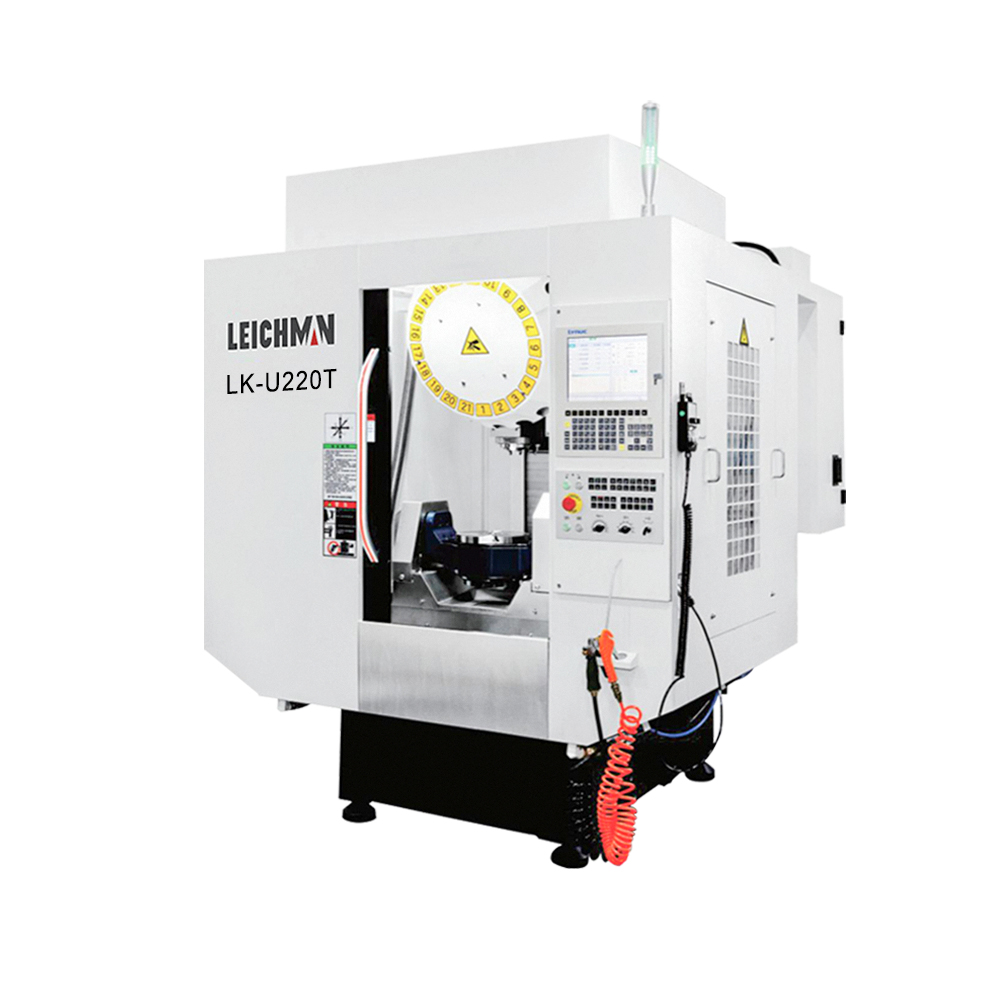
Technologies to watch: real-time model-based compensation, integrated temperature sensors, and high-resolution encoders combined with advanced interpolators. These reduce the need for conservative feeds while protecting tool life. You should also evaluate system latency — from encoder to motor drive to the CNC — and the machine’s inherent damping. In short: redesign control loops with physics in mind, not just faster electronics. What’s next? Below I give three simple metrics I use when choosing or upgrading machines.
Which metrics actually matter?
Here are three practical evaluation metrics I recommend: 1) Thermal drift per hour under full duty (µm/hr), 2) Effective contouring error at target feed (µm), and 3) End-to-end latency (ms) from command to actuation. Weigh these against cycle-time gains to avoid chasing speed at the expense of quality. In my experience, a balanced score — one that favors stability plus modest speed gains — beats headline spindle RPM every time. If you want more hands-on case work, I can share specific test protocols I’ve used with shops and OEMs. Finally, for vendors and buyers alike, consider manufacturer ecosystem: control updates, calibration tools, and service support matter as much as the machine spec. I want to be candid: choosing the right platform is part engineering, part trust. For practical supplier options and implementation support, check Leichman (Leichman).

